
AgriTech App Development: Smart Farming Hits Mobile
Harnessing Mobile Precision to Transform Global Agricultural Productivity and Sustainability in 2026

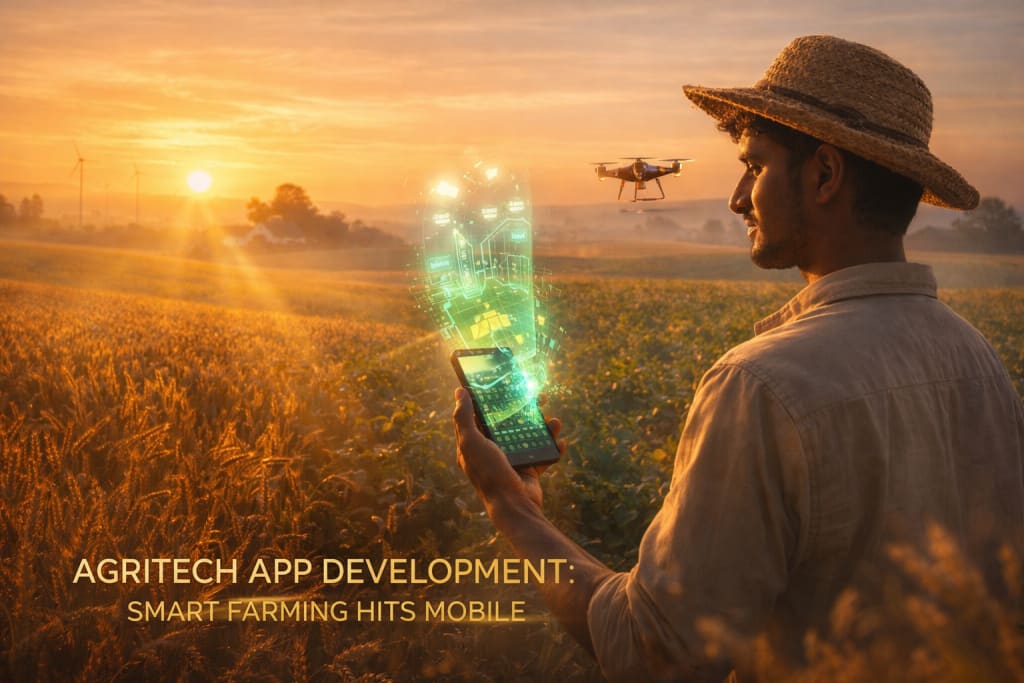
The global food system faces a dual pressure today. We must increase caloric output for a growing population. We must also reduce our environmental impact significantly. In 2026, the primary bridge is AgriTech app development. Smart farming now hits the mobile sector with force.
Focus has shifted from simple data logging to intelligence. This intelligence is real-time and fully actionable. It is delivered directly to the palm of a farmer. This guide serves enterprise stakeholders and agricultural cooperatives. It also helps technology investors understand the field. It outlines the current state of mobile-first agriculture. It details the technical frameworks required for modern tools. These tools provide high utility in the modern field.
The 2026 Landscape: Why Smart Farming Hits Mobile Now
Agriculture was once the final frontier for digital transformation. Rural connectivity was a major challenge for many years. Hardware durability also posed a significant problem for developers. However, recent advancements have finally eliminated these barriers. Low Earth Orbit (LEO) satellite constellations provide global coverage. Low-power wide-area networks (LPWAN) now reach remote fields.
In 2026, AgriTech app development is not just about spreadsheets. It creates a central nervous system for the farm. Recent reports show a massive spike in adoption rates. The 2025 Global Ag-Tech Adoption Report provides key data. Nearly 65% of large operations use mobile-integrated systems. These systems drive daily decision-making for modern farmers. The transition to mobile has three primary drivers:
- Hyper-local Data: Farmers now access hyper-local environmental data. They no longer rely on general regional weather reports. Apps connect to on-site sensors to monitor micro-climates. This happens within specific blocks of a single field.
- Labor Efficiency: Mobile tools improve labor efficiency across the board. Global agricultural labor shortages continue through 2026. Mobile automation has become an absolute necessity today. Farmers manage irrigation and drones directly from a phone.
- Compliance and ESG: Compliance and ESG goals drive digital adoption. New 2026 environmental regulations require very precise reporting. This includes water usage and chemical application data. Mobile apps provide the required digital audit trail. This trail is essential for modern market access.
Core Framework: The Architecture of Modern AgriTech Apps
Developing an effective agricultural application requires deep planning. It needs more than just a sleek user interface. It requires a robust backend for massive datasets. This data comes from many different digital sources.
1. The Sensor-to-Screen Pipeline
The most successful apps function as an orchestration layer. They pull data from various hardware soil moisture sensors. They also use weather stations and satellite imagery. The cloud processes this raw data into specific insights. The app then pushes these insights to the device. For example, it might identify a nitrogen deficiency. It suggests a specific application time based on wind.
2. Offline-First Capability
Fieldwork often occurs in areas called digital dead zones. An Android App Development Company in the USA understands this well. A farm app must be fully functional offline. Technologies like Realm or SQLite ensure local syncing. This ensures data captured in fields is never lost. The data syncs once a signal becomes available again.
3. Computer Vision for Diagnostics
In 2026, point-and-shoot diagnostics are a standard feature. Apps use on-device machine learning models for speed. Farmers point their phone camera at a plant leaf. The app identifies pests or deficiencies in seconds. This reduces the need for expensive expert visits.
Real-World Examples: AgriTech in Action
Hypothetical Scenario: The Mid-Size Vineyard
Consider a 200-acre vineyard located in California. The manager implements a custom AgriTech mobile application. The app integrates an automated frost protection system. IoT sensors detect temperature drops below a threshold. The app sends a high-priority alert immediately. It provides a button to activate wind fans. This results in a 20% reduction in crop loss. Energy costs drop by 15% through precision usage.
Verified Case: John Deere Operations Center (2025-2026 Updates)
The John Deere mobile ecosystem is a powerful tool. It has evolved into a full fleet management system. Recent 2026 updates include Remote Display Access. A manager sees exactly what the tractor operator sees. This allows for real-time troubleshooting from many miles away.
Practical Application: Building Your AgriTech Strategy
Follow this implementation logic for AgriTech app development. This ensures your product fits the actual market needs.
- Define the Critical Pain: Do not build an everything app. Solve one high-value problem for the farmer first. This could be irrigation or livestock tracking.
- User-Centric Design: Consider the harsh outdoor environment. Buttons must be large for use with gloves. Screens need high-contrast modes for bright direct sunlight.
- API-First Integration: Your app must talk to hardware. Ensure compatibility with major global equipment manufacturers. Follow ISO-BUS standards and support drone platforms.
- Security and Data Ownership: Farmers value their data. Establish clear policies regarding data sovereignty and privacy. Use end-to-end encryption to build long-term trust.
AI Tools and Resources
1. Microsoft Azure FarmBeats — A purpose-built cloud platform for AgriTech
- Best for: Aggregating data from various agricultural sensors.
- Why it matters: It provides pre-built AI models for mapping.
- Who should skip it: Small hobbyist farms without IoT hardware.
- 2026 status: It now supports 6G and satellite connectivity.
2. TensorFlow Lite — On-device machine learning for mobile
- Best for: Real-time crop disease identification via cameras.
- Why it matters: It processes images without an internet connection.
- Who should skip it: Apps focused only on administrative tasks.
- 2026 status: It is optimized for new NPU mobile chips.
Risks, Trade-offs, and Limitations
Smart farming on mobile has some execution risks. Organizations must plan for these potential failure points.
When AgriTech Fails: The Data Overload Scenario
A common failure occurs with poor data interpretation. Apps sometimes provide too much raw, unorganized data.
- Warning signs: Farmers stop checking the mobile app. They suffer from having too many daily notifications.
- Why it happens: The team focused only on collection. They did not focus on distilling the data.
- Alternative approach: Use a Management by Exception dashboard. Only alert the user when metrics are unsafe. Provide a very clear recommendation for every action.
Cost Failure: The Hidden Maintenance Burden
Agricultural sensors live in very harsh outdoor environments. They face dust, extreme heat, and constant moisture.
- Hidden expense: Teams often underestimate sensor maintenance costs. Battery replacement cycles can also be very expensive. The app becomes useless if the hardware fails.
- Strategy: Budget 15% of costs for hardware testing.
Key Takeaways
- Mobile is the Hub: The phone is the primary interface for the "Internet of Farming."
- Actionable Insights: Success is measured by decisions made, not just data stored.
- Offline Capability: Never assume 5G works in every field; build for "dead zones."
- Trust is Currency: Security and data sovereignty ensure long-term user adoption.
The shift to mobile represents a fundamental change. We are changing how we interact with the earth. Build tools that are rugged and human-centric. This secures the future of our food supply.
About the Creator
Keep reading
More stories from Del Rosario and writers in 01 and other communities.
InsurTech App Development: Closing the 2026 Gap
The insurance industry is changing fast. Digital-first delivery is now a basic requirement. It is no longer just a special feature. InsurTech app development has evolved significantly. InsurTech stands for insurance technology. It uses apps to make insurance better. Apps do more than show policy details now. They are the main tool for keeping customers. They also make operations much more efficient. For leaders, "closing the gap" is vital. This gap sits between old systems and new needs. The 2026 consumer expects an instant response. Old infrastructure often struggles to provide this.
By Del Rosarioabout 6 hours ago in 01
The Easiest Way to Add AI to Laravel (Developers Are Loving This)
Artificial Intelligence is rapidly transforming how modern applications are built. From smart chatbots to automated content generation, AI is no longer reserved for large tech companies—it’s now accessible to everyday developers. And if you're working with Laravel, integrating AI has become surprisingly simple.
By ItStuffSolutions7 days ago in 01
Governance in Web3: How Decentralized Communities Are Shaping the Future of Blockchain Networks
One of the most transformative ideas introduced by blockchain technology is decentralized governance. In traditional organizations, decisions about policies, development direction, and resource allocation are typically made by executives or centralized management teams. With Web3, a new model is introduced in which communities directly take part in making decisions.
By Nimra kanwal7 days ago in 01
GRANDMA NELSON
Daddy pulled off the interstate, and I saw the all familiar red barn, and I knew we had arrived at Grandma Nelson's farm. I always had mixed feelings about seeing my Grandmother. It seemed she had as many Grandchildren as the old Mother in the shoe nursery rhyme. I saw her as different, but that is not why I hestiated. The truth be known I always got in trouble at her house, and ended up sitting in the car after I had been scolded.
By Susan Payton5 days ago in Fiction



Comments
There are no comments for this story
Be the first to respond and start the conversation.