
How AI is Transforming Mobile App Development
Learn how AI affects the creation of mobile apps. Learn how to incorporate AI into business operations, examine real-world examples, and identify important patterns.

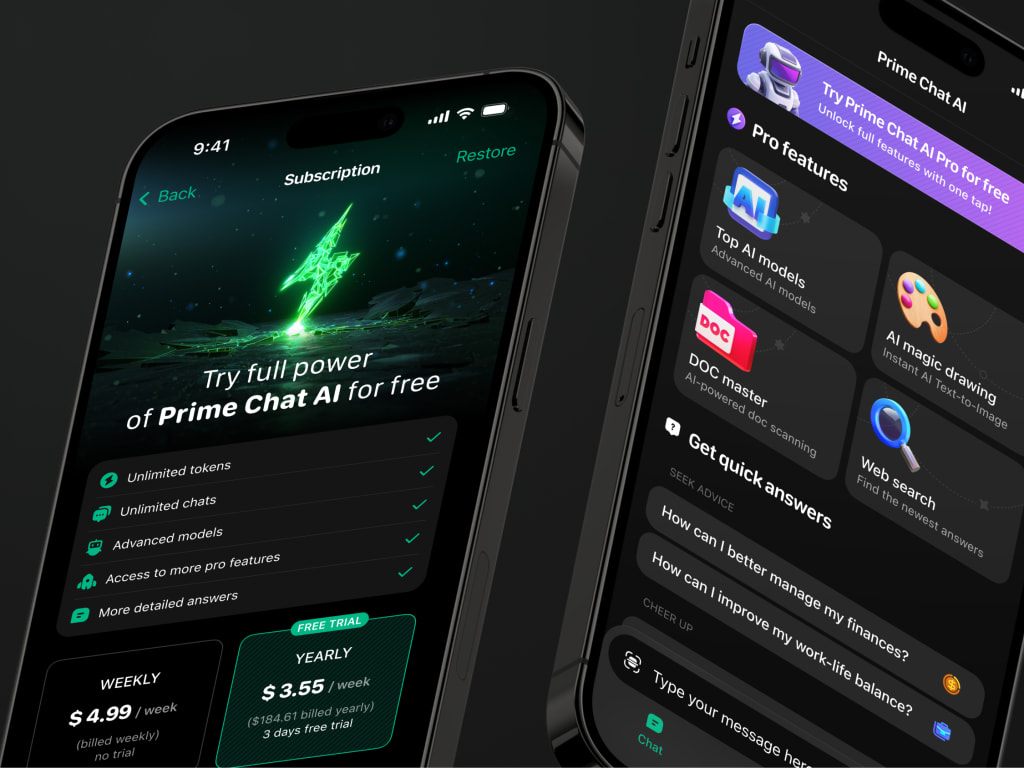
Generative AI and similar technologies have firmly embedded themselves into the fabric of our daily routines. From researching facts and performing professional tasks to navigating new environments, we increasingly rely on intelligent digital companions. Consequently, it comes as no surprise that the realm of application development is undergoing a similar transformation.
However, diving into practical examples, case studies, or instructional manuals can feel daunting. Scrolling through professional networks often feels like an endless barrage of posts claiming some new "groundbreaking" breakthrough. This raises valid questions: Does artificial intelligence genuinely enhance workflows? Which emerging patterns are worth adopting? Or is this merely exaggerated marketing noise?
Let's pause and look past the buzz. Here, we will explore the integration of AI within mobile app creation, highlighting pivotal movements and fundamental changes in how we construct, deploy, and expand mobile solutions. Stay tuned, as the insights ahead could fundamentally reshape your approach to product strategy.
The Expanding Influence of AI on Mobile Creation
Reshaping the Mobile Ecosystem
The pace of evolution is remarkable. Only a few years ago, bringing up "AI" in a strategy session might have elicited skepticism, with many envisioning rudimentary chatbots struggling with basic greetings. Today, these technologies serve as the foundation for the most seamless applications available.
Ignoring this shift is no longer an option. Founders and technical leaders have likely observed a dramatic surge in user demands. Modern audiences expect applications that understand them intimately. Attempting to achieve such deep personalization using legacy coding techniques is akin to trying to excavate a mountain with a teaspoon—it is simply inefficient.
So, what is occurring behind the scenes? Primarily, operational efficiency is seeing a substantial uplift. Development timelines are being shortened by weeks because AI manages the mundane aspects of the job. This includes generating repetitive code blocks, establishing initial project structures, or drafting the tedious unit tests that engineers often dread. By offloading these tasks, your technical team can concentrate on complex logic and the unique features that differentiate your product.
Furthermore, artificial intelligence is revolutionizing user experience (UX). While recommendation algorithms were once a luxury reserved for major streaming platforms, users now anticipate predictive capabilities in every application. Imagine a health tracker proposing a specific exercise routine based on local weather conditions and your recent sleep patterns. While slightly uncanny, this level of anticipation fosters a positive connection. When an application appears to truly "understand" its user, engagement duration increases while abandonment rates drop. It is a straightforward equation.
Automation stands out as another critical advantage. AI systems are now managing customer service inquiries, filtering content instantly, and dynamically optimizing device battery life. For instance, implementing an intelligent layer to sort support tickets ensures that human agents focus solely on intricate, high-priority problems. Such efficiencies are becoming vital for commercial viability; failing to utilize these tools essentially hands the competitive advantage to rivals.
The conclusion is evident: AI is transitioning from a novelty to a necessity. The applications that will dominate the coming years are those that leverage intelligence to simplify operations for developers, enterprises, and end-users alike.
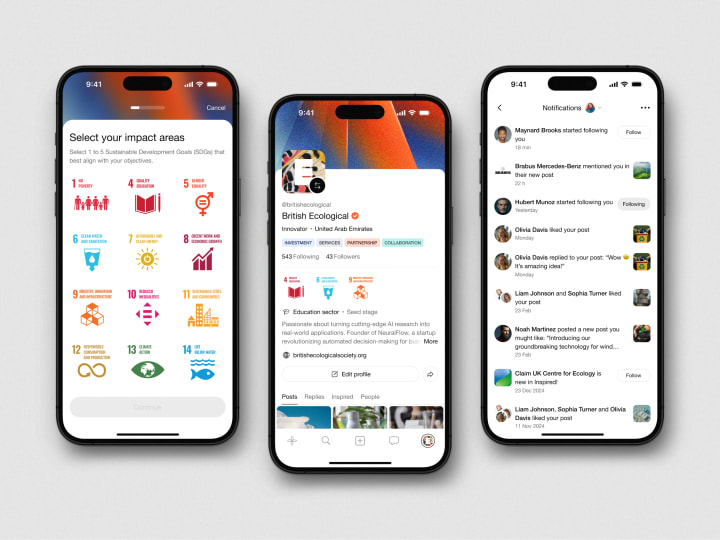
Major AI Movements Shaping Mobile Applications
Hyper-Personalization Driven by Intelligence
Nothing frustrates a user more than feeling like a generic entry in a spreadsheet, especially when an app serves up suggestions that are completely irrelevant. It raises the question of whether any human oversight was involved at all.
Intelligent personalization is rewriting the rules by moving far beyond simple transactional logic like "you purchased X, so buy more X." Instead, it grasps the broader context. Consider a fitness application: a user launching it at 6:00 AM on a weekday has vastly different objectives than the same individual opening it at 8:00 PM on a weekend.
We are witnessing a transition from rigid, static dashboards to fluid interfaces that morph based on the specific viewer. If a person consistently bypasses lengthy tutorials, the software adapts to offer concise tips. If they habitually purchase coffee every Friday, the app prepares that option before they even begin scrolling. This shifts the perception from mere software to a supportive companion, which is the key to fostering loyalty.
When an application syncs with a user's lifestyle rather than forcing them to adapt to its constraints, it ceases to be just a tool and becomes an ingrained habit.
Voice Integration and Natural Language Understanding
Everyone knows the annoyance of typing complex queries on a small screen while commuting or struggling to navigate intricate menus one-handed while carrying groceries. This is precisely why voice assistants and Natural Language Processing (NLP) have become central trends in mobile development. The goal is to embed voice capabilities directly into the core architecture of the application.
Modern technology has reached an impressive level of sophistication, capable of deciphering nuances, diverse accents, and even colloquial slang. This significantly lowers the entry barrier for users who find traditional graphical interfaces cumbersome. Furthermore, it enhances accessibility in a manner that feels organic rather than obligatory.
Beyond merely transcribing words, NLP now comprehends intent. If a user states, "I need to fix my flight," the system recognizes the need for rebooking options rather than simply displaying current status information. This transforms interactions into something conversational and nearly human.
The more seamless the interaction, the less friction exists. Reduced friction inevitably leads to higher user satisfaction.
Predictive Analytics and Intelligent Suggestions
Historically, businesses relied on retrospective data to understand past performance. Today, AI features in mobile apps analyze real-time patterns to forecast future behavior. E-commerce platforms utilize this to identify users at risk of leaving and automatically present discounts or tailored messages to retain them. This represents a shift from reactive measures to proactive strategies.
Recommendation engines have also matured. The old model of "customers who bought this also bought that" is obsolete. Modern systems factor in the time of day, geographic location, current cultural trends, and even the user's emotional state. For instance, a music streaming service might detect that you are preparing for bed and subtly transition the playlist to slower tempos without an explicit request. Similarly, a productivity tool might suggest a break upon noticing a decline in your typing velocity.
These timely, subtle interventions cultivate trust. Users begin to feel that the application truly understands them, transforming a basic utility into a collaborative partner.
Advanced Image Recognition via Machine Learning
Recall when image recognition was limited to distinguishing between cats and dogs? Today, machine learning in mobile applications can analyze a photograph of your refrigerator to propose recipes or scan a damaged vehicle component to provide an immediate repair estimate. The progress has been extraordinary. Features that once demanded costly hardware or desktop-based software are now accessible right in your pocket.
Consider Augmented Reality (AR) as a prime example. Retailers are leveraging this technology to allow customers to virtually "try on" garments or visualize how a sofa fits within their living space with remarkable precision. The underlying ML models have improved significantly in interpreting lighting, depth, and texture in real time.
For instance, a project in our portfolio involved a virtual fitting concept for Axel Arigato. Users could select and visualize sneakers using their smartphone camera, eliminating the need to travel to a store, navigate crowds, or search for the right size. This level of detail revolutionizes user engagement by seamlessly blending the digital and physical realms.
For enterprises, integrating AI into mobile development minimizes product returns, increases consumer confidence in purchasing decisions, and generates experiences compelling enough for users to share across social media platforms.

A Practical Roadmap for Embedding AI in Mobile Applications
1. Selecting the Optimal Framework or Tool
So, you’ve committed to integrating artificial intelligence into your mobile strategy. Now you’re likely facing a bewildering array of acronyms and wondering if a computer science degree is suddenly required. Rest assured, it’s manageable. Think of this step as choosing the right engine for your vehicle.
If your target is exclusively the Apple ecosystem, Core ML is often the ideal choice. It integrates natively with iOS, offers exceptional speed, and processes data on-device, which is a significant advantage for user privacy.
Conversely, if you are developing for cross-platform environments or require robust Android support, TensorFlow Lite or ML Kit are excellent alternatives. These tools offer great flexibility and are supported by vast developer communities.
However, don’t simply choose the framework with the most popularity on GitHub. Align your selection with your specific objectives. Need real-time visual analysis? Seek out frameworks specialized in computer vision. Building a conversational agent? Prioritize tools with strong Natural Language Processing (NLP) capabilities.
Sometimes, building a model from scratch isn’t necessary at all. Numerous pre-trained APIs, such as Google Cloud Vision or Azure Cognitive Services, allow you to inject powerful AI capabilities without ever training a model yourself.
2. Data Collection and Preparation
The efficacy of your AI is directly tied to the quality of your data. The old adage "garbage in, garbage out" holds true here. Many talented teams hit roadblocks because they rushed this phase, assuming they could grab a public dataset and refine it later. Spoiler: "Later" rarely happens, and the result is often a biased or ineffective model.
For successful AI-driven mobile development, your training data must mirror real-world user inputs. If you are creating a fitness app for seniors, training exclusively on data from young athletes will lead to failure.
Beyond volume, data hygiene is paramount. Expect to invest significant time removing duplicates, correcting missing values, and ensuring accurate labeling. It’s tedious work, but it is the foundation of success. Think of it like cooking: even with the most advanced stove, rotten ingredients will ruin the dish. Take the time to organize your datasets, anonymize sensitive information, and ensure they accurately reflect reality. Your future self—and your users—will appreciate it when your algorithm stops suggesting snowboards to people living in tropical climates.
3. Model Training and Validation
With your data prepared, it’s time to train the model. This is where the magic occurs, but it’s also where unexpected issues can arise. You feed in the data, let the algorithms process it, and wait. However, never assume the model is learning correctly without supervision.
Vigilant monitoring is essential. Watch out for overfitting, a scenario where the model memorizes the training data so perfectly that it fails when encountering new, unseen information. It’s akin to a student who memorizes textbook answers but cannot solve a slightly varied problem on an exam.
Validation is just as critical as training. You must test the model against a completely separate dataset it has never encountered to gauge its true performance. Don’t rely solely on accuracy metrics. For instance, in a fraud detection system, 99% accuracy might sound impressive until you realize the model missed every single fraudulent transaction because such events are rare. You need to evaluate precision, recall, and other relevant metrics.
Start small. Build a prototype, test it with a limited internal group, and identify where it fails. Failure is normal at this stage; the goal is to uncover gaps and address them before real users ever interact with the product.
4. Deployment and Ongoing Monitoring
Your model performs well in the lab—does that mean it’s ready for launch? Not so fast. Deploying AI to mobile devices introduces unique challenges: limited battery life, unstable internet connections, and a fragmented landscape of device models.
Ensure your model doesn’t drain user batteries within an hour. You may need to compress the model or offload certain processes to the cloud. It’s a delicate balance between speed, cost, and performance.
Once live, your work is far from over; in fact, the real journey begins. Models can suffer from data drift. What worked last month might fail today due to shifts in user behavior, emerging trends, or even seasonal changes in lighting conditions for image recognition.
Establish robust monitoring systems to track AI performance in the real world. Are users ignoring suggestions? Is image recognition failing on specific devices? Continuously analyze these metrics and be prepared to retrain your model with fresh data to maintain its relevance and accuracy.

The Horizon of AI in Mobile Application Creation
The Convergence of AI and Augmented Reality (AR)
Augmented Reality is swiftly evolving from a niche novelty reserved for gaming into a ubiquitous, mainstream utility. With an estimated 1.07 to 1.4 billion AR-capable devices currently in circulation, the technology is transcending simple visual overlays. We are entering an era where AR possesses a genuine comprehension of its surroundings.
Imagine pointing your smartphone camera at a malfunctioning engine component. Instead of displaying a generic schematic, an AI-enhanced AR system could identify the specific model, assess visible wear and tear, and highlight the exact bolt requiring adjustment. This capability relies on real-time analysis of context, spatial depth, and physical laws.
Consequently, AI-driven AR features in mobile apps will cease to be mere novelties and will begin addressing tangible challenges. When the fusion of digital and physical realms becomes this seamless, users will stop noticing the underlying technology; they will simply perceive the solution.
Dynamic Personalization via Continuous Learning
Currently, most personalization mechanisms are static: users set preferences, the app adjusts once, and the configuration remains fixed until manually altered.
The next evolution in mobile machine learning focuses on continuous adaptation. Applications will evolve in tandem with the user. For example, an app might detect reduced activity on Mondays and automatically adjust its notification frequency. Alternatively, it could recognize an increase in typing speed—indicating urgency—and streamline the interface accordingly.
This level of intuitive responsiveness fosters a deep, resilient loyalty. Users transition from merely tolerating an app to relying on it as an essential tool. Naturally, this raises valid privacy concerns. Transparency regarding data collection and the logic behind adaptive behaviors will be paramount. However, organizations that successfully build this trust will see engagement metrics soar, transforming their product from a simple utility into an intelligent partner that grows wiser daily.
The Era of AI-Driven Development Automation
While AI is revolutionizing user experiences, its impact on the development lifecycle itself is even more profound. We have moved beyond tools that merely generate boilerplate code; we are approaching a future where AI manages the heavy lifting of the entire software creation process.
Soon, artificial intelligence will be capable of generating code, executing thousands of test scenarios overnight, identifying and rectifying bugs, and deploying updates before the development team has even finished their morning coffee.
Teams are already leveraging AI to forecast potential bottlenecks in their workflows by analyzing historical performance data. Rather than reacting to system crashes, these systems provide proactive warnings, such as flagging a new feature that might cause memory leaks on older Android devices before the code is even committed. This drastically accelerates timelines and eliminates the need for frantic, late-night troubleshooting.
Ultimately, this automation liberates developers to focus on what they do best: solving creative challenges and crafting meaningful features. By offloading repetitive, mundane tasks, we empower engineering teams to return to their true role as innovators.
About the Creator
Shakuro
We are a web and mobile design and development agency. Making websites and apps, creating brand identities, and launching startups.
Why Professional Cameras Are Dying
The Sony A1 arrived in January 2021 as the ultimate hybrid camera, a technological tour de force that combined professional-grade stills with cutting-edge video in a body that promised to replace both my aging Canon DSLR and my dedicated video camera, and I watched every review, read every specification breakdown, and convinced myself that the $6,500 price tag for body only plus another $3,000 for premium lenses was an investment in my photography business that would pay for itself through superior image quality and expanded creative capabilities. Three years later, as I scroll through my photo library and realize that ninety percent of the images I have shared, published, and even printed were captured on my iPhone 15 Pro rather than the A1 that sits in my closet still pristine because it only has 3,000 shutter actuations, I am forced to confront uncomfortable truths about professional cameras, about the gap between technical capability and practical usefulness, and about how smartphone computational photography has disrupted professional imaging in ways that many camera enthusiasts refuse to acknowledge because accepting these truths means accepting that our expensive gear has become increasingly irrelevant for most real-world photography.
By The Curious Writera day ago in 01



Comments
There are no comments for this story
Be the first to respond and start the conversation.