
Why Business Intelligence Projects Fail
A closer look at what goes wrong—and how to avoid expensive mistakes


Business Intelligence (BI) sounds like the perfect solution on paper. Better data, smarter decisions, and a clear edge over competitors—it’s easy to see why so many companies invest in it.
But here’s the reality: a lot of BI projects don’t live up to those expectations. Not because the tools are bad. And not because the idea is wrong. More often, things fall apart due to small gaps—in planning, execution, or simply how people use the system. And those gaps add up over time.
Let’s break down where it usually goes wrong.
When Expectations Don’t Match Reality
Most BI projects start with big ambitions. Teams picture clean dashboards, real-time insights, and quick wins that drive growth almost instantly.
But once the work begins, things get complicated.
Data is scattered across multiple systems. Numbers don’t always match. Teams can’t agree on which metrics actually matter. What seemed simple at the start quickly turns into a slow and sometimes frustrating process.
That mismatch between expectation and reality is often the first crack in the foundation.
Unclear Goals from the Start
One of the biggest mistakes companies make is jumping into BI without a clear purpose.
If you’re not sure what you want to achieve, the system ends up trying to cover everything—and in the process, delivers very little value.
Are you trying to improve sales? Streamline operations? Understand customer behavior better?
Without clear answers, dashboards become cluttered, and insights lose their direction.
The Problem with Bad Data
No matter how advanced your BI tool is, it can’t fix poor-quality data.
If your data is inconsistent, outdated, or incomplete, the results won’t be reliable. And once people start doubting the numbers, they stop trusting the system altogether.
At that point, the project doesn’t just slow down—it quietly fails.
Too Much Complexity, Too Soon
It’s easy to assume that more data means better insights. But in BI, that’s not always true.
Some teams build dashboards packed with charts, filters, and endless metrics. Instead of helping users, this often overwhelms them.
A good BI system should make decisions easier, not harder. When people struggle to understand what they’re looking at, they simply stop using it.
When No One Actually Uses It
Even a perfectly built BI system is useless if no one adopts it.
If teams aren’t trained properly—or don’t see how it helps them—they’ll go back to what they’re comfortable with. Spreadsheets, manual reports, or even gut-based decisions.
This is one of the most common (and overlooked) reasons BI projects fail. Everything might work technically, but without users, it has no real impact.
Skipping the Human Side of Change
BI isn’t just about technology—it’s about changing how people think and work.
Shifting from instinct-based decisions to data-driven ones takes time. It also requires support, training, and clear communication from leadership.
When this part is ignored, resistance builds naturally. And that slows everything down.
Underestimating Time and Effort
A lot of businesses expect BI projects to deliver results quickly.
But in reality, a big part of the work happens behind the scenes—collecting, cleaning, and organizing data. And that takes time.
When deadlines stretch and costs increase, confidence in the project starts to drop. In some cases, it even gets abandoned halfway through.
How to Get It Right
The good news? Most of these problems can be avoided with the right approach.
A few simple shifts can make a big difference:
- Start with a clear goal—know exactly what you want to achieve
- Focus on getting your data right from day one
- Keep dashboards simple and easy to use
- Invest in training so people actually use the system
- Treat BI as an ongoing process, not a one-time setup
Small wins early on can build trust and keep everyone aligned.
Final Thoughts
Business Intelligence can be incredibly powerful—but only when it’s done thoughtfully. Most failures aren’t caused by the technology itself. They happen because of unclear goals, messy data, or lack of user adoption.
The key is to keep things simple, practical, and focused on real business needs. When that happens, BI stops being just another tool—and becomes a part of how decisions are made every day.
About the Creator
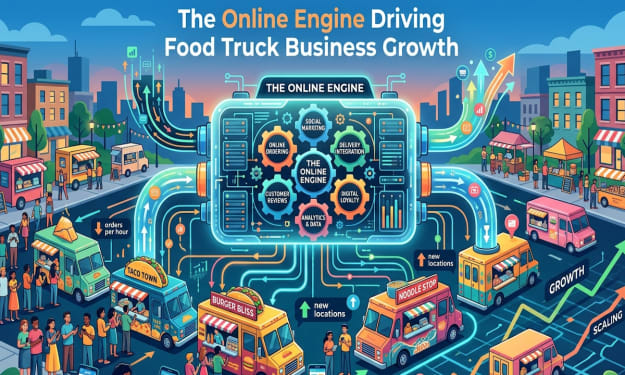
The Online Engine Driving Food Truck Business Growth
In recent years, food trucks have evolved from simple street vendors into thriving mobile businesses with loyal customer bases. Their flexibility, lower startup costs, and unique culinary offerings make them an attractive option for entrepreneurs. However, as competition grows and customer expectations rise, having a strong digital presence has become essential. This is where websites play a crucial role—acting as the online engine that drives food truck business growth.
By Nayel Basim Al Shehhia day ago in 01
NFT Marketplace Apps: What 2023 Taught Us in 2026
The blockchain landscape of 2026 looks very different today. It has changed since the volatile cycle of the early 2020s. For those building NFT Marketplace Apps, 2023 was a vital year. It served as a definitive "cleansing" period for the entire industry. This period fundamentally reshaped how we trade digital assets now. We have moved past the era of profile-picture (PFP) speculation. We are now in a phase of high-utility functionality. Cross-chain capability and legal compliance are now standard requirements. Marketplaces must now provide real-world value to survive.
By Del Rosarioabout 12 hours ago in 01
Foraging Appalachia’s Wild Edibles
It's that time of year again and Appalachia offers a remarkable abundance for anyone willing to learn its seasonal gifts and practice careful gathering. Across ridges, holler's, stream-side's, and meadows, edible plants, berries, roots, and fungi appear through every part of year. Knowledge is key and teaches not only what can be eaten, but also how to gather with respect so that these resources remain available far into future.
By Tim Carmichael2 days ago in Feast



Comments
There are no comments for this story
Be the first to respond and start the conversation.