
Captain De Cuellar and His Adventures
By Karl McBeath


The Spanish Armada set sail to land ashore on English soil. 100 galleons with 1,000 Iberian sailors on each to land in England, in the belly of the beast. They were foiled at sea and fled journeying around the Hebrides, the last survivors were dogs, washed ashore on the West Coast, terriers that would over the centuries be westies named “Jock” posing for shortbread tins. The rest of the crews landed at Streedagh Beach, Sligo. The Gallowglass enlisted by the English took their claymore to the Spanish swines and let the beach wallow in their blood, bespectacled with Latin bodies. Few were saved for being Catholic and the rest were on the run, they ventured north and it was Captain De Cuellar who ventured to Connaught and Ulster, precariously not knowing when each night might be his last. The souls he lost on his watch haunting his every step, their spirits and blood soaking into the land and people, the black hair of the west, the strength to repel the English on the rocks and ground, through famine and purposeful pain and passing. The millions of skeletons that would perish and the language that would fervently remain; the shadow of the nation would be seeping with blood of sacrifice like a bog of an ancient bard, or a fighter who was a Milesian sparring with the supernatural force, the Tuatha De Nannan. As the clock would be covered and the death would be celebrated with a wake - De Cuellar was petrified by these lands, and he wrote his journal, begging for help from the king abroad.
He was wandering the hills at night. Where the spirits pitted the kingdoms in haunting, the bards of yesteryear would speak of lineage for eternity, how Scota, Nel and Goidel Glas gave them life and meaning through the seas, Fenius Farsaid the Scythian King tattooed his body and rode horses through heaven, writhing on the breeze, passed like the Tower of Babel, which Breogan tried to replicate to which they came, which across the sea they did come, this is not the first, but the traffic and trade flowed , which the English would try and destroy for generations. The Atlantean people, to never trust a Fitzgerald, the Normans which were given land like the rest of the French, but it was not theirs to take, as De Cuellar pondered if he would be abandoned, whose going to save them his comrades and his pen, for his life was a great deal to him, and would be to his wife, the mistress from Madrid. Would it ever come? The rescue mission. Would it be a gamble? The crew had gone, perhaps; so had his patience and his life was just a whole different matter. He was wandering alone, but not hoped, for the possibility of a return with his companions was on his mind, the biggest thing to happen in 1588, the year that thee Thomas Hobbes was birthed; nasty, brutish and short. So he wanted more, he remembered how little he would dismiss the heat of Spain, so he could not cope with the Errenn cold, the mist and the red hair he would spot, the dank cold places and rocks and islands, the cold and the wet weather hung like a veil over a mirror, the spot of bother he had encountered, the spirit, the holy spiritual power that kept him going, as he spoke to god, and asked him to show him the way home and he was dying of thirst, and he was wandering in wondering of a rescue.
About the Creator
Keep reading
More stories from Karl McBeath and writers in Art and other communities.
Clan MacBean
It was an eerie lit night. As I wandered across the moors. To find myself following the pursuit of all those missing people. The 1,000 odd people missing over a few years. The seers had met me at the inn and discussed what they had seen, in their dreams, for they say it is a man missing with his 40 odd strong clan. They headed for the mountains. Wild folk. Disappearing messengers into thin air. Never seen again. Scarier than anything from hell. This thing is human. Goes by the name of Seany Bean. His clan of 40 people wild as they come. To what means of disappearance I cannot say. The seers allude to maybe witchcraft. Surely not. The ancient wizardry still lingers of the highlands. Where druids would rule, they would use magic against the beasts that roamed wild.
By Karl McBeathabout a month ago in Art
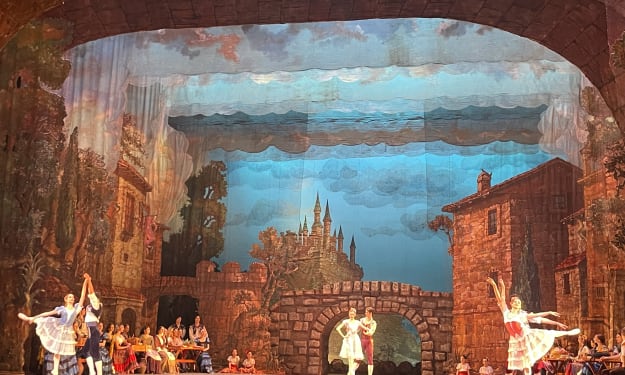
Laurencia
I have attended another performance at the beautiful Tbilisi Opera and Ballet State Theater. I didn't take a picture before the performance started, but this one was taken during the break between the acts. Gives you an idea of how beautiful and grand the theater is as well.
By Lana V Lynx3 days ago in Art
How machines can learn from human behaviour
In order to understand where we are and where we are going, we need to understand where we were first. - Susan Fourtane Could a human behaviour simulator be embedded into a robot or online avatar to the point that it’s hard to distinguish between a real person or artificial intelligence? Scientists have been upping the stakes in this “Turing test” for years, to the point that human-mimicking programmes are ready to answer tricky questions, assist people with online shopping or be companions.
By Susan Fourtané a day ago in Futurism



Comments
There are no comments for this story
Be the first to respond and start the conversation.