
Bhakti Rasamrita Sindhu
A Timeless Guide to Pure Bhakti, Sacred Rasa, and Loving Service to Lord Krishna

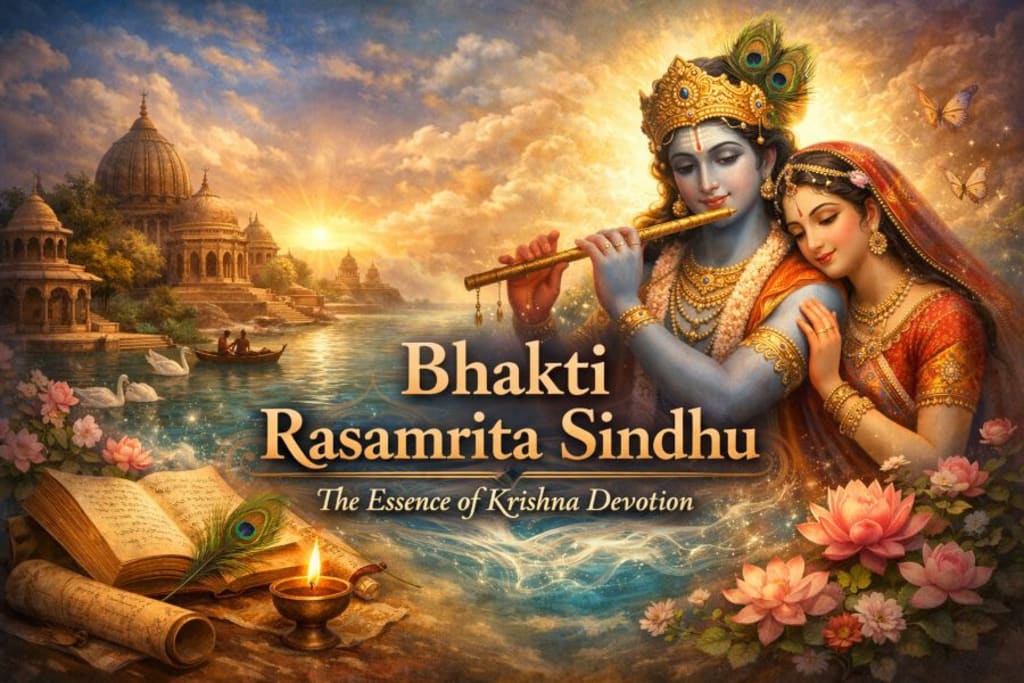
Bhakti Rasamrita Sindhu: The Core Philosophy of Krishna Devotion
In the vast world of Vaishnava literature, few books hold the same spiritual weight and theological depth as Bhakti Rasamrita Sindhu. Written by Srila Rupa Goswami, this sacred text is one of the foundational works of Gaudiya Vaishnavism and remains essential for anyone who wants to understand the true nature of devotion to Lord Krishna. It does not present bhakti as a vague feeling or occasional religious emotion. Instead, it explains devotion as a complete spiritual science—systematic, transformative, and eternal. For readers who want to explore authentic editions and devotional study resources, BRS books from Mayapur Store are often sought out as a practical starting point for deeper study and personal reflection.
This scripture is not just for monks, scholars, or advanced practitioners. It speaks to every sincere seeker who wants to know how pure devotion develops, why devotion is considered higher than ritual or dry philosophy, and how love for Krishna matures through practice, humility, and spiritual association. In a time when many people are searching for meaning but feel lost in superficial spirituality, Bhakti Rasamrita Sindhu offers something rare: clarity, depth, structure, and spiritual sweetness.
Meaning of Bhakti Rasamrita Sindhu
The title Bhakti Rasamrita Sindhu carries profound meaning. “Bhakti” refers to devotion, loving service, and heartfelt spiritual engagement with the Supreme Lord. “Rasa” refers to spiritual taste, divine relationship, and the living emotional essence of devotion. “Amrita” means nectar or immortality, and “Sindhu” means ocean. Taken together, the title describes an ocean of immortal nectar found in pure devotion to Krishna.
This is not poetic exaggeration. Srila Rupa Goswami deliberately presents bhakti as something vast and unlimited. True devotion is not a narrow practice or a sectarian obligation. It is an endless ocean of spiritual experience in which the soul discovers its natural relationship with Krishna. That relationship is not artificial or newly created. It is eternal, but forgotten under the influence of material consciousness. Bhakti revives that lost relationship.
The text is deeply respected because it organizes devotion with extraordinary precision. It explains what bhakti is, what it is not, how it begins, how it grows, how it becomes steady, and how it ultimately reaches the stage of divine love. This kind of theological and practical clarity is one reason why Bhakti Rasamrita Sindhu continues to guide devotees across generations.
Central to Krishna Devotion
Many spiritual texts inspire, but not all of them define the path with such depth and authority. Bhakti Rasamrita Sindhu is central to Krishna devotion because it lays out the philosophy and method of devotional life in a complete way. It shows that bhakti is not merely one path among many equal spiritual experiments. It is the soul’s natural function and the highest expression of spiritual realization.
In Krishna devotion, love is not sentimentalism. It is not based on mood alone, and it is not separate from truth. This scripture teaches that love for Krishna grows through hearing, chanting, service, remembrance, and surrender. It also teaches that pure devotion must be free from selfish motivations. In other words, bhakti reaches its purest form when a devotee serves Krishna simply for Krishna’s pleasure.
That teaching has deep importance. In ordinary life, most relationships are mixed with expectation. People want comfort, recognition, security, emotional return, or some visible benefit. But Bhakti Rasamrita Sindhu explains a higher principle—devotion that is not business, not bargaining, and not self-centered. This is what makes Krishna bhakti spiritually elevating. It brings the heart from possession to offering, from demand to surrender, and from ego to divine relationship.
The Definition of Pure Bhakti
One of the greatest gifts of this text is its precise definition of uttama-bhakti, or pure devotional service. Srila Rupa Goswami explains that pure devotion is favorable service to Krishna, performed without ulterior desires and not covered by karma, jnana, or other selfish pursuits. This definition is one of the most quoted and respected in the entire Gaudiya Vaishnava tradition.
Its importance cannot be overstated. Without a clear definition, devotion can easily become confused with ritual performance, emotional expression, social identity, or personal ambition. A person may think they are practicing bhakti while still being driven mainly by worldly desires, liberation goals, pride, or speculative philosophy. Rupa Goswami cuts through that confusion by defining devotion in its pure state.
Pure bhakti means Krishna is no longer treated as a means to achieve something else. He is not approached only for wealth, relief, prestige, or escape. He becomes the center, the beloved, and the ultimate goal. This transforms the entire spiritual journey. Instead of asking what one can gain from God, the devotee begins asking how one can lovingly serve Him. That shift is the beginning of real spiritual maturity.
The Progressive Stages of Devotional Life
Another core contribution of Bhakti Rasamrita Sindhu is its explanation of how devotion unfolds progressively. Bhakti is not described as an instant emotional breakthrough. It develops through recognizable stages, each one deepening the soul’s relationship with Krishna.
The path begins with faith, known as shraddha. This initial faith may be simple, but it opens the door to spiritual life. From faith comes association with devotees, and from that association comes engagement in devotional practice. As the practitioner follows the process sincerely, unwanted habits and inner obstacles begin to fade. Steadiness develops, then taste, then attachment, then spiritual emotion, and finally pure love of God.
This progression is especially valuable because it gives practitioners realistic expectations. Spiritual life does not become deep overnight. Most people struggle with inconsistency, distraction, doubt, or emotional dryness at some point. Bhakti Rasamrita Sindhu does not deny these realities. Instead, it places them within a larger process of purification. The message is deeply hopeful: sincere bhakti, practiced with patience and good association, inevitably transforms the heart.
Sadhana Bhakti and the Discipline of Daily Practice
A major part of the text focuses on sadhana bhakti, the regulated practice of devotional service. This is the stage where the practitioner intentionally engages body, mind, senses, time, and habits in Krishna’s service. It is not yet the full spontaneous state of divine love, but it is the ground on which that love grows.
Sadhana bhakti includes practices such as hearing about Krishna, chanting His holy names, remembering His form and qualities, serving the deity, offering prayers, rendering service, cultivating surrender, and remaining in the association of devotees. These practices may appear simple externally, but spiritually they are profound. They gradually cleanse the heart of material conditioning and reawaken the soul’s original devotion.
What makes this section of the text so powerful is its balance of practicality and depth. It does not romanticize devotion as a mere feeling. It teaches that love grows through disciplined engagement. Just as a musician becomes refined through daily practice, a devotee becomes spiritually awakened through regular contact with Krishna through sacred practice. Over time, what begins as discipline turns into attraction, and what begins as duty becomes joy.
The Role of Association in Spiritual Growth
No serious discussion of Bhakti Rasamrita Sindhu is complete without emphasizing sadhu-sanga, or the association of devotees. Srila Rupa Goswami makes it clear that spiritual company plays a decisive role in the development of bhakti. A person’s heart is shaped by what they hear, whom they admire, what habits they absorb, and what values surround them.
In devotional life, association is not merely social belonging. It is spiritual influence. Through association with sincere devotees, a seeker learns how bhakti is actually lived. They hear Krishna-katha, witness humility in action, observe steadiness in adversity, and receive impressions that cannot be gained through theory alone. This living transmission is one of the greatest strengths of the bhakti tradition.
This principle is even more relevant in the modern world. Today people are constantly shaped by digital culture, social trends, and endless distraction. Attention itself has become fragmented. In such an environment, devotional association becomes a form of inner protection. It helps preserve sincerity, nourishes conviction, and keeps the practitioner connected to the real goal of Krishna consciousness. Good association does not merely support devotion—it often determines whether devotion deepens or weakens.
Bhava and Prema: The Highest Achievement of Devotion
While Bhakti Rasamrita Sindhu is systematic and philosophical, it ultimately points toward the most beautiful destination imaginable: divine love. The higher stages of devotion described in the text include bhava and prema, which represent the awakening and full blossoming of pure spiritual love for Krishna.
Bhava is the stage where spiritual emotion becomes deeply established. The devotee’s heart is softened, purified, and naturally drawn to Krishna with profound sincerity. This is no longer ordinary religious practice. It is the beginning of direct spiritual taste. Prema is the fully ripened stage of that love—completely selfless, uninterrupted, and overflowing with divine intimacy.
This is one of the most distinctive teachings of Gaudiya Vaishnavism. The goal is not simply liberation from suffering, nor absorption into impersonal existence. The goal is loving relationship with Krishna. That love is living, personal, and eternally expanding. Bhakti Rasamrita Sindhu therefore offers not only a philosophy of devotion but also a vision of the soul’s supreme fulfillment.
For modern readers, this is a radical and deeply attractive idea. It means spiritual perfection is not emptiness, but love. It is not isolation, but relationship. It is not self-erasure, but the full awakening of the soul in connection with the Supreme Person.
How This Scripture Differs from General Spiritual Literature
There are many books today that speak about peace, positivity, self-awareness, or inner calm. While such themes may carry some value, Bhakti Rasamrita Sindhu stands apart because it offers much more than general inspiration. It provides a fully articulated theology of devotion grounded in scriptural revelation and realized spiritual experience.
Unlike vague spiritual writing, this text clearly identifies the Supreme Truth as Krishna and the soul’s eternal identity as His servant. It explains the means of realization and the stages of inner transformation. It does not reduce spirituality to mood, motivation, or personal preference. Instead, it offers a path that is both disciplined and deeply relational.
Another important difference is that this scripture harmonizes philosophy and emotion. Many systems lean heavily toward abstract thought or emotional expression, but Bhakti Rasamrita Sindhu integrates both. It is intellectually structured while remaining spiritually sweet. It honors theological precision without losing devotional beauty. That balance is one reason it continues to resonate with both scholars and sincere practitioners.
Relevance of Bhakti Rasamrita Sindhu in the Modern Age
Even though this text was written centuries ago, its message is astonishingly relevant today. Modern life often leaves people mentally overloaded, emotionally tired, and spiritually undernourished. There is no shortage of information, but there is a deep shortage of inner grounding. People consume content constantly yet still feel disconnected from purpose and truth.
Bhakti Rasamrita Sindhu responds to this condition by offering a path of sacred focus. It teaches that real fulfillment does not come from endless consumption, identity performance, or temporary emotional highs. It comes from reawakening the soul’s eternal relationship with Krishna through sincere devotion.
The text also challenges the modern tendency to make spirituality self-centered. Today spiritual language is often used for self-enhancement, image-building, or emotional convenience. But Rupa Goswami presents a much purer vision. In his teaching, spirituality is not about using God to decorate the ego. It is about offering oneself in love and service. That reversal is transformative. It brings humility, clarity, emotional depth, and spiritual purpose.
For those seeking a path that is scriptural, personal, emotionally rich, and philosophically strong, this work remains one of the most important guides available.
Conclusion
Bhakti Rasamrita Sindhu is one of the crown jewels of Krishna devotional literature. It defines pure bhakti, explains its practices, maps its development, warns against distractions, and reveals the soul’s highest destination in divine love for Krishna. Few texts combine philosophical depth and devotional sweetness so completely.
Its enduring relevance lies in the fact that it addresses the deepest human need: the need to love and be connected to the Absolute Truth in a real, personal, and eternal way. Srila Rupa Goswami does not offer abstract religion or sentimental faith. He offers a science of devotion that transforms the heart from the ground up.
For anyone serious about understanding the core philosophy of Krishna devotion, Bhakti Rasamrita Sindhu is not just recommended reading. It is foundational. It remains a timeless guide for seekers who want more than inspiration—seekers who want authentic spiritual awakening rooted in service, purity, and love.
About the Creator
sudeshna rarhi
Shopping at the ISKCON Mayapur Store is not just about purchasing goods, but also about participating in a tradition of devotion, supporting local artisans, and promoting the spread of Krishna consciousness worldwide.
Keep reading
More stories from sudeshna rarhi and writers in Education and other communities.
How Bhakti Rasamrita Sindhu Defines Krishna Consciousness
Bhakti Rasamrita Sindhu and the Foundations of Krishna Consciousness The spiritual landscape of India has gifted humanity with countless texts, but few have influenced devotional practice as deeply as Bhakti Rasamrita Sindhu. For anyone seeking a profound understanding of Krishna devotion, this sacred work serves as a timeless compass. Within the first steps of exploring this tradition, one naturally encounters a comprehensive Guide to Bhakti Rasamrita Sindhu, which unveils the systematic path of bhakti, or loving devotional service, in its purest form.
By sudeshna rarhi3 days ago in Education
The Devastating Failure of Modern Education: Why Our Schools Are Producing Obedient Workers Instead of Critical Thinkers
The modern education system is fundamentally broken, not in the sense that it is failing to achieve its intended purpose, but rather in the more insidious sense that it is succeeding brilliantly at a purpose that no longer serves the needs of students, society, or the future we are rapidly hurtling toward, and this success in achieving outdated objectives while the world transforms around it represents one of the great institutional failures of our time, a failure with consequences that ripple through every aspect of contemporary life from economic inequality to political polarization to our collective inability to address existential challenges like climate change and technological disruption. The factory model of education that we inherited from the industrial revolution, designed explicitly to produce compliant workers who could follow instructions, tolerate boredom, and accept hierarchy without question, persists largely unchanged despite the fact that the factories it was meant to serve have either disappeared or been automated, and we continue to subject millions of children to a system that treats them as widgets to be processed through standardized procedures, measured against arbitrary benchmarks, and sorted into categories that will largely determine their economic and social outcomes for the rest of their lives.
By The Curious Writer6 days ago in Education
Daily Oral Hygiene Tips to Follow
Proper oral hygiene plays a critical role not only in maintaining a bright smile but also in protecting overall health. Many people are familiar with structured routines for skincare or hair care, where each step follows a specific order for maximum effectiveness. Oral hygiene, however, is often practiced without much thought about the sequence of steps. In reality, the order in which dental care tasks are performed can significantly impact how effective they are. By following a well-structured routine—starting with a rinse, then flossing, brushing carefully, and finally cleaning the tongue—individuals can dramatically improve the health of their teeth and gums.
By Martin Urban, DDS5 days ago in Education



Comments
There are no comments for this story
Be the first to respond and start the conversation.