
🧠 Digital Memory "Lag": Does AI Remember Us Better Than a Middle School Friend?
Why Your AI Doesn't Feel That "Click" of Recognition ✨

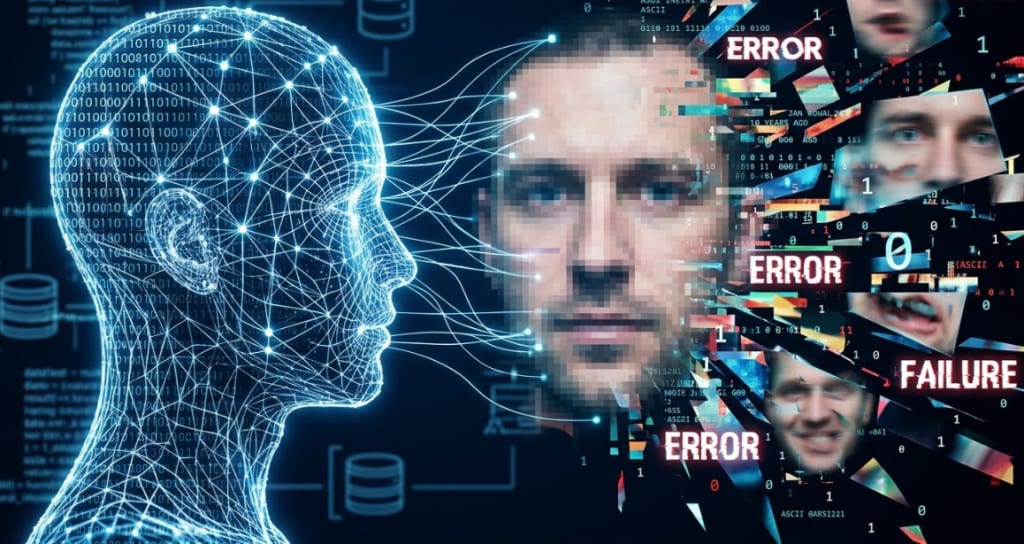
You know the feeling. You’re lazily scrolling through your Facebook feed 📱 when suddenly your eye catches a name: Jan Kowalski. The face in the profile picture looks strangely familiar—those same slightly squinted eyes, maybe that same smile, though now framed by a thicker beard. Your neurons start firing wildly ⚡. You know you know him. You know that ten years ago you grabbed coffee together or sat at the same desk in class. But the context? Evaporated. All that’s left is a dry "I recognize him" 😶.
In the age of algorithms and ubiquitous artificial intelligence, this common human experience provokes a fascinating question: does the technology we interact with every day face similar dilemmas? Do advanced language models, while analyzing our queries, "feel" like they recognize us from somewhere? 🤔
🏗️ Brain vs. Server: Two Different Tales of the Past
Human memory is a fascinating, biological mess 🧬. Humans don’t save data the way a hard drive does. Instead of dry facts, we create complex networks of associations. You remember Jan Kowalski from Facebook not because your brain stores a file named Jan_Kowalski_2014.jpg, but because his persona is inextricably linked to a specific emotion, the smell of an old lecture hall, or a particular event in your life 🎓. This is episodic memory, saturated with colors and feelings.
In the case of artificial intelligence, things look completely different. Modern AI systems operate on two levels of "memory," neither of which resembles human sentiment 🤖:
Statistical Memory (Training): 📚 This is everything the AI has read during months of learning from massive datasets. If Jan Kowalski is a public figure and has been written about on the internet, the AI "recognizes" him the same way it recognizes the capital of France or the laws of thermodynamics. It is pure mathematics—the statistical probability that a specific last name and set of achievements follow a certain first name.
Context Window (Current Conversation): 💬 This is a type of working memory. During a chat, the algorithm keeps threads mentioned a few minutes earlier in its "awareness." However, in standard settings, the moment the chat window is closed, the user becomes a complete stranger to the system. Digital amnesia occurs instantly and irrevocably 👻.
🌀 Great Forgetting and Great Hallucinating
When you look at Jan Kowalski’s profile and can’t recall the circumstances of your meeting, your brain—hating a vacuum—tries to "fill in the blanks" 🎶. "Maybe he’s a cousin of someone from work? Or maybe we met at that wedding?". Humans often create false memories just to patch holes in their life story.
Artificial intelligence shows a surprisingly similar tendency, which researchers call hallucination 😵💫. If we ask a model about someone for whom statistical data is incomplete, the AI might start making up a biography with immense confidence. This stems from the system's architecture: its job is to predict the most probable sequence of words. If the truth is unavailable, statistics will provide the most convincing lie 🤥. This mechanism resembles human "it seems to me," though its foundation is a processor, not unreliable neurons.
🔍 Key Differences in "Recognizing" Facts
To understand why an AI will never feel nostalgia upon seeing Jan Kowalski, it is worth comparing the processes occurring in the human brain with operations on servers:
Durability of Memories: ⏳ Human memory fades over time if not refreshed—details about Jan blur, giving way to new information. In the AI world, data is binary: it is either in the database (and remains perfectly sharp) or it is deleted from the servers, which means total, irreversible forgetting.
The Role of Emotions: 💔 For humans, emotions are the "glue" of memory. You remember Jan because, for example, he impressed you or annoyed you. For artificial intelligence, Jan Kowalski is strictly a set of tokens and mathematical weights. The algorithm doesn’t feel a "tweak in the processor" at the sight of a familiar writing style.
Precision and Subjectivity: 🎯 Your memory of Jan is subjective and can be wrong. AI memory within the scope of training data strives for absolute precision; however, when that data runs out, the system can generate a completely fabricated reality without any awareness of the error.
Privacy of Recording: 🔐 Your thoughts and "half-memories" about a friend from FB are your exclusive property, locked within biological structures. Interactions with AI are recorded, analyzed, and often anonymized for the purpose of improving technology, making this memory an external process controlled by corporations.
🏛️ Summary: Two Worlds, One Nostalgia
The next time you experience that strange void in your head at the sight of a familiar face on social media, treat it as proof of your human nature ✨. The fact that you "sort of recognize" something but can't quite name it proves that your brain prioritizes the world according to importance and emotion, not just dry entries in a registry.
Artificial intelligence may surpass us in the speed of recalling facts about Jan Kowalski, but it will never feel that specific "click" in the head that accompanies recognizing an old friend after years 🤝. In this digital race for memory, our ability to forget remains one of our most human qualities 🍃.
About the Creator
Piotr Nowak
Pole in Italy ✈️ | AI | Crypto | Online Earning | Book writer | Every read supports my work on Vocal
Keep reading
More stories from Piotr Nowak and writers in Futurism and other communities.
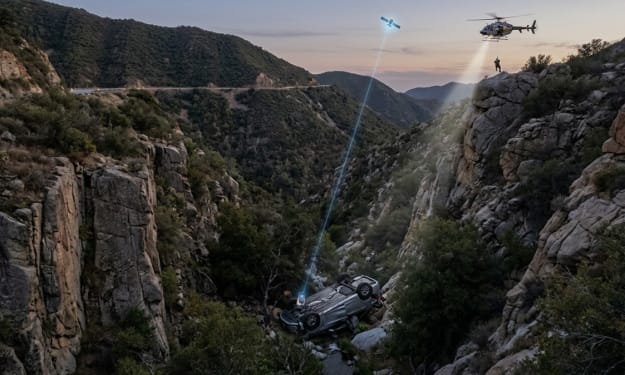
🤖 AI as a Silent Guardian Angel: How Algorithms Won the Battle Against Death in a California Canyon
In today’s article, I’ll share another story where AI actually saved a human life—listen up. 🎧✨ Usually, when we think of Artificial Intelligence, we picture computer-generated images, chatbots writing essays, or—in darker scenarios—robots taking over the world. 🤖🚫 But we rarely stop to consider that AI is, above all, a powerful mathematical tool capable of making a decision in a fraction of a second that a human never could. The story that unfolded in December 2022 in the mountains of California is the ultimate proof that algorithms have become our "silent guardian angels." 🛡️😇
By Piotr Nowak4 days ago in Futurism
How machines can learn from human behaviour
In order to understand where we are and where we are going, we need to understand where we were first. - Susan Fourtane Could a human behaviour simulator be embedded into a robot or online avatar to the point that it’s hard to distinguish between a real person or artificial intelligence? Scientists have been upping the stakes in this “Turing test” for years, to the point that human-mimicking programmes are ready to answer tricky questions, assist people with online shopping or be companions.
By Susan Fourtané 4 days ago in Futurism
Green Hydrogen Market: Exponential Growth Phase, 44.55% CAGR Projections, & Industry Outlook
According to IMARC Group's latest research publication, global green hydrogen market size was valued at USD 2,477.8 Million in 2025. Looking forward, IMARC Group estimates the market to reach USD 68,257.4 Million by 2034, exhibiting a growth rate (CAGR) of 44.55% during 2026-2034.
By sujeet. imarcgroup3 days ago in Futurism
Turquoise Clouds in a Green Sky
“I always remember the first time I saw the green sky and the turquoise clouds skating across it.” These words had stayed with Alice Barrett for two years. She’d been six- years-old and snuggled next to her great-grandmother, known to nearly all the family as Granny Rose, on a large, rather uncomfortable armchair. Granny Rose had been telling her a story, at least that’s what Alice believed, but it was a strange memory, blurry apart from those few words.
By Matthew Batham5 days ago in Fiction


Comments
There are no comments for this story
Be the first to respond and start the conversation.