
Flexible Packaging Market Outlook: Sustainable Packaging Demand and Consumer Goods Expansion Opportunities
The flexible packaging market is experiencing strong growth, driven by increasing demand for lightweight, cost-effective, and convenient packaging solutions across food & beverage, pharmaceuticals, personal care, and household product industries.

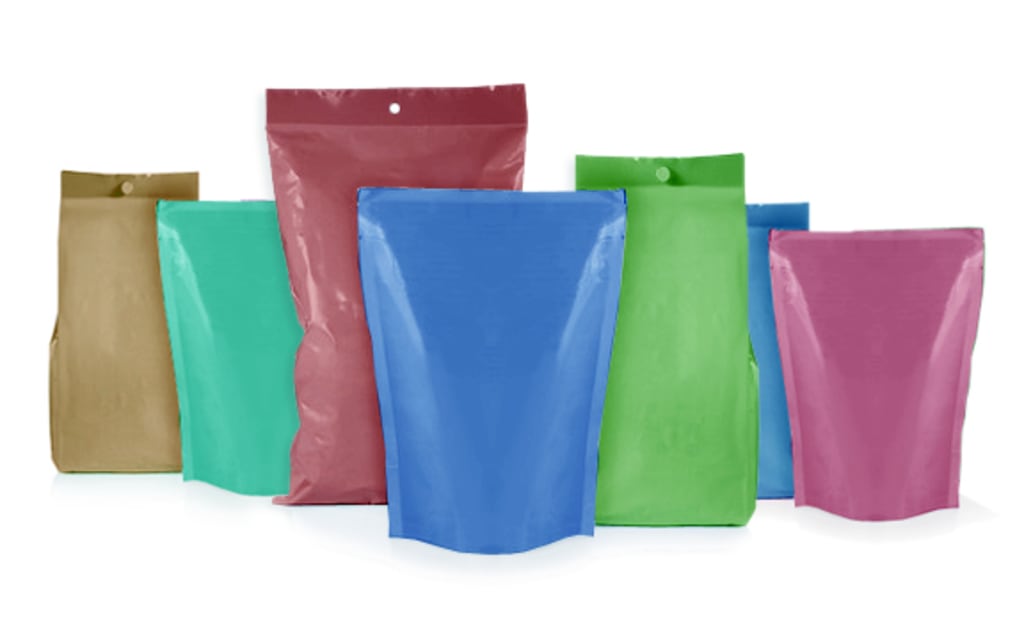
According to IMARC Group's latest research publication, The global flexible packaging market size reached USD 146.0 Billion in 2025. Looking forward, IMARC Group estimates the market to reach USD 243.7 Billion by 2034, exhibiting a growth rate CAGR of 5.57% from 2026-2034.
How AI is Reshaping the Future of Flexible Packaging Market
- Automated Quality Inspection and Defect Detection: Computer vision systems scan packaging materials at production speeds, identifying microscopic defects, color inconsistencies, and seal integrity issues that human inspectors would miss. These AI-powered systems reduce waste by catching quality problems immediately, ensuring only perfect packages reach customers while cutting inspection costs.
- Predictive Maintenance and Production Optimization: Machine learning algorithms analyze sensor data from packaging equipment to predict mechanical failures days before they happen, preventing costly downtime. Smart systems continuously optimize temperature, pressure, and material flow settings in real time, maximizing throughput while minimizing energy consumption and material waste throughout production.
- Intelligent Material Selection and Design: AI algorithms evaluate thousands of material combinations to recommend optimal packaging designs that balance protection, sustainability, and cost. Generative design tools create right-sized packaging that uses minimal material while meeting all performance requirements, accelerating product launches from months to weeks.

Flexible Packaging Industry Overview:
The flexible packaging sector is thriving as brands respond to consumer demands for convenience and sustainability. Over 76% of American adults now shop online regularly, driving explosive demand for lightweight, durable packaging that reduces shipping costs and product damage during transit. Major manufacturers like Amcor, Berry Global, and Mondi are investing heavily in recyclable and compostable materials, with Amcor reaching 209,000 metric tons of post-consumer recycled content representing nearly 10% of total volume as companies race to meet sustainability targets while maintaining product protection.
Flexible Packaging Market Trends & Drivers
E-commerce growth is fundamentally reshaping packaging requirements across all product categories. Online retail sales in the United States surpassed $1 trillion annually while China's e-commerce market exceeded $2 trillion, creating massive demand for packaging that survives shipping while minimizing dimensional weight charges. Flexible formats like pouches and flow wraps reduce material usage by up to 75% compared to rigid containers while occupying less warehouse space and cutting transportation emissions. Ghost kitchens and delivery-only restaurants are expanding rapidly at over 4% annually, requiring secure flexible packaging that maintains food quality during transport without expensive dine-in infrastructure investments.
Sustainability mandates and circular economy initiatives are forcing rapid innovation in materials and design. The European Union's Circular Economy Action Plan requires 55% of plastic packaging to be recyclable, pushing manufacturers toward mono-material structures that simplify recycling streams. The U.S. Department of Energy invested $13.4 million in advanced recycling technologies in January 2022 to reduce plastic waste and carbon emissions throughout product lifecycles. Amcor and Stonyfield Organic launched the first all-polyethylene spouted pouch in 2024, demonstrating industry commitment to recyclable formats. SABIC's bio-renewable polyethylene derived from used cooking oil reduces carbon footprint by approximately 30% while meeting all food safety standards, showing how sustainable materials now match conventional performance.
Food and beverage applications dominate flexible packaging demand, representing over 72% of market volume as manufacturers prioritize shelf life extension and portion control. The global ready-to-eat food market is projected to reach $262.4 billion, with flexible packaging essential for maintaining freshness without refrigeration in emerging markets. Advanced barrier films enable room-temperature storage of products previously requiring refrigeration, cutting energy costs throughout distribution networks. Pharmaceutical manufacturers increasingly adopt flexible blister packs and unit-dose sachets for improved patient compliance and medication safety. India's pharmaceutical industry is expected to reach $130 billion, driving demand for tamper-evident flexible packaging that meets stringent regulatory requirements while reducing material costs compared to traditional rigid bottles.
Leading Companies Operating in the Global Flexible Packaging Industry:
- Amcor Limited
- Bemis Company
- Berry Global Group, Inc
- Mondi Limited
- Sealed Air
- Aluflexpack AG
- Bak Ambalaj Sanayi
- Constantia Flexibles
- Clondalkin Group
- Danaflex Group
- DS Smith Plc
- Glenroy, Inc
- Huhtamaki PPL Limited
- Printpack, Inc.
- ProAmpac Intermediate, Inc.
Flexible Packaging Market Report Segmentation:
By Product Type:
- Printed Rollstock
- Preformed Bags and Pouches
- Others
Printed rollstock represents the largest class, accounting for 59.7% market share, as continuous pre-printed film rolls offer maximum customization flexibility and production efficiency for manufacturers.
By Raw Material:
- Plastic
- Paper
- Aluminium Foil
- Cellulose
Based on the raw material, the market has been segmented into plastic, paper, aluminium foil, and cellulose.
By Printing Technology:
- Flexography
- Rotogravure
- Digital
- Others
Flexography exhibits clear dominance with 62.7% market share due to high-speed capabilities reaching 2000 linear feet per minute while producing minimal waste.
By Application:
- Food and Beverages
- Pharmaceuticals
- Cosmetics
- Others
Food and beverages have the largest market share of 72.1% owing to flexible packaging's ability to extend shelf life while providing barrier protection for diverse products.
Regional Insights:
- North America (United States, Canada)
- Asia Pacific (China, Japan, India, South Korea, Australia, Indonesia, Others)
- Europe (Germany, France, United Kingdom, Italy, Spain, Russia, Others)
- Latin America (Brazil, Mexico, Others)
- Middle East and Africa
Asia Pacific exhibits a clear dominance in the flexible packaging market with 45.8% market share due to rapid urbanization and expanding food processing industries.
Recent News and Developments in Flexible Packaging Market
- December 2024: UFlex announced over $200 million investment in Egypt to expand production capacity significantly. The expansion incorporates state-of-the-art manufacturing facilities for packaging solutions, demonstrating UFlex's commitment to leveraging Egypt's strategic geographic position for serving global export markets across Africa, Europe, and the Middle East regions.
- December 2024: Toppan Holdings completed acquisition of Sonoco's Thermally Formed Plastics division to strengthen its global packaging portfolio substantially. The strategic acquisition enhances Toppan's ability to deliver sustainable, high-performance packaging solutions across multiple industries while expanding market share in specialized thermoformed plastic applications for food, pharmaceutical, and consumer goods sectors.
- August 2023: Amcor entered into agreement to acquire Phoenix Flexibles, marking a significant expansion in India's rapidly growing packaging market. Phoenix Flexibles operates facilities in Gujarat generating approximately $20 million annual revenue through flexible packaging for food, personal care, and home care applications, bringing Amcor's total Indian manufacturing plants to five.
- September 2022: Huhtamaki announced strategic investment in Emerald Technology Ventures' sustainable packaging fund to accelerate next-generation packaging innovation. The investment aims to leverage breakthrough technologies from emerging startups developing sustainable packaging solutions, supporting Huhtamaki's commitment to environmental responsibility and circular economy principles.
- June 2023: CCL Industries signed agreement to acquire Italy-based Pouch Partners s.r.l., a specialist in gravure-printed and laminated flexible film materials. Pouch Partners provides highly specialized flexible films for pouch forming including innovative recyclable solutions, strengthening CCL's capabilities in premium flexible packaging markets across Europe.
Note: If you require specific details, data, or insights that are not currently included in the scope of this report, we are happy to accommodate your request. As part of our customization service, we will gather and provide the additional information you need, tailored to your specific requirements. Please let us know your exact needs, and we will ensure the report is updated accordingly to meet your expectations.
About the Creator
James Whitman
With years of experience in analyzing global industries, I specialize in delivering actionable market insights that help businesses stay ahead in an ever-changing landscape.
Keep reading
More stories from James Whitman and writers in Futurism and other communities.
Biscuits Market Outlook: Convenience Food Demand and Snacking Trends Growth Opportunities
According to IMARC Group's latest research publication, The global biscuits market size was valued at USD 134.1 Billion in 2025. Looking forward, IMARC Group estimates the market to reach USD 191.4 Billion by 2034, exhibiting a CAGR of 4.00% from 2026-2034.
By James Whitmanabout 15 hours ago in Futurism
Australia Bearings Market: Precision Engineering Demand, Industrial Automation Expansion & Renewable Energy Equipment Growth
According to IMARC Group, the Australia bearings market reached a value of USD 1.45 Billion in 2025 and is projected to reach USD 3.57 Billion by 2034, growing at a compound annual growth rate (CAGR) of 10.51% during 2026–2034. The market is experiencing robust growth as industries increasingly rely on high-performance mechanical components to support advanced machinery and equipment. Bearings play a critical role in reducing friction between moving parts and enabling efficient operation in mechanical systems used across automotive manufacturing, industrial machinery, energy production and transportation infrastructure. As Australia continues expanding its manufacturing capabilities and modernizing industrial operations, the demand for precision-engineered bearings is rising. Additionally, the rapid deployment of renewable energy infrastructure, including wind turbines and solar tracking systems, is increasing the need for specialized bearings capable of operating in demanding environmental conditions.
By Kevin Coopera day ago in Futurism



Comments
There are no comments for this story
Be the first to respond and start the conversation.