
Stagecoach (1939) is Still Great!
All aboard for Lordsburg!

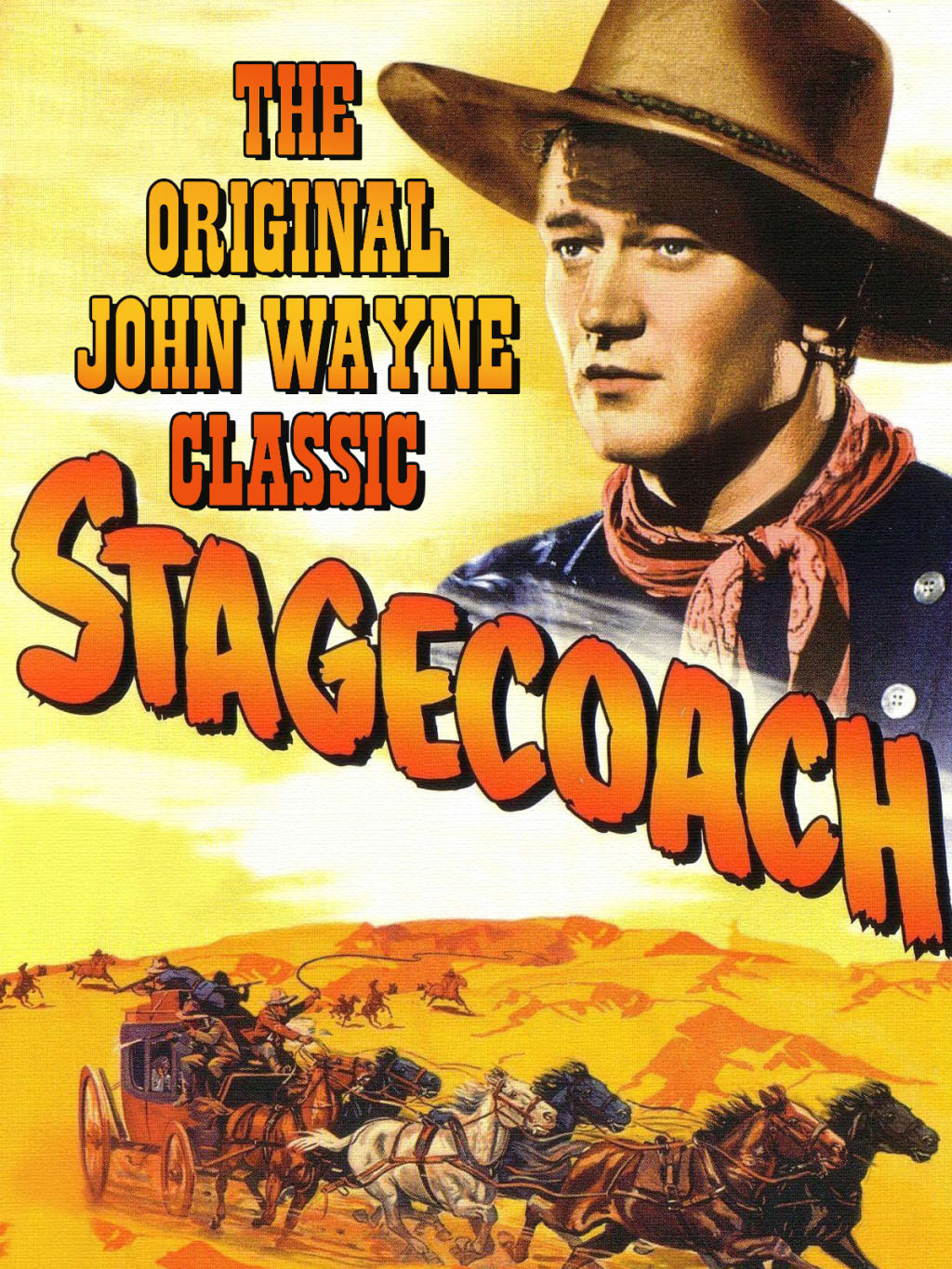
I love westerns, I've said it before, and I'll say it 'til the cows come home. Unfortunately, however, the western genre isn't always family-friendly...unless you look at some of the older titles to hit the screen. See, usually, when one thinks of westerns, the image of men and women riding around in broad-brimmed hats with revolvers, and shooting bad guys is what comes to mind. The genre is quite literally built around violence...most of the time.
If you go back to the early days, however, the genre had a very different vibe. The 1930s saw a significant change in the genre with the introduction of the Hays Code, a set of rules that basically limited what could and couldn't be done in film. This brought the musical adventures of Roy Rogers and other, more family-oriented films.
Stagecoach - the film we're looking at today - was released in 1939, at the height of the code's enforcement. So, here's the question: Is a western that's almost 90 years old (87, if you want the exact number) still worth watching?
Well, let's discuss it.
An Adaptation of The Stage to Lordsburg
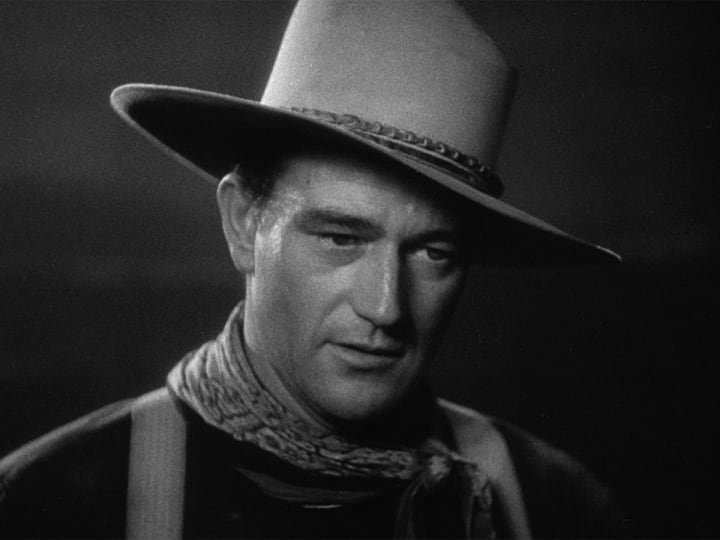
Loosely based on Ernest Haycox's 1937 short story, The Stage to Lordsburg, production on Stagecoach was...rocky. Director John Ford had a hard time getting funding, as westerns had been somewhat out of fashion for a bit at the time. He finally got lucky with Walter Wanger, although that required a bit of compromise.
John Ford wanted John Wayne to have the key role of the Ringo Kid, but Wayne wasn't very well-known at the time. Wanger wanted Gary Cooper (of High Noon fame) to play Ringo Kid and Marlene Dietrich as the love interest character of Dallas. The two eventually compromised, with Ford giving top billing to actress Claire Trevor, who was better known than John Wayne at the time. With that compromise in place, Wanger contributed $250,000 to the film's budget.
Stagecoach was released on March 2, 1939, and was met with critical acclaim and cemented John Wayne's future as a leading man.
"He'll be the biggest star ever because he is the perfect 'everyman'" - Director John Ford on John Wayne's potential
While it's seen some criticism since its release, particularly for its portrayal of Native Americans, the film's success led to its being deemed culturally and historically significant.
The Storyline
The story takes place in 1880, when a group of travellers boards a stagecoach from Arizona to the town of Lordsburg in New Mexico. Along the way, the stage encounters the Ringo Kid (John Wayne) on the road. Ringo is on his way to Lordsburg to avenge the murders of his family.
As the group travels, they have to worry about an Apache chief - Geronimo - who's on the warpath.
Where Does Stagecoach Shine?
I loved the story; it's well-written and perfectly paced.
Speaking of the writing, it's perfectly balanced. Every film has a 'line' of sorts, a balancing beam between genres; this line is often razor-thin. It's very easy to lean too far into the drama and leave the comedy and romance aspects alone, leading to a film that's just a chore to watch. On the other hand, if you swing the other way, the film becomes painful to watch differently.
Stagecoach is one of the few films that balances out its genre work almost perfectly. The action sequences are tense and dramatic, and the romance is good but not overdone. Likewise, the comic relief characters of Doc Boone and Buck are great because their comedic moments are there-and-gone; they're long enough to give you a laugh, but not so long as to outstay their welcome.
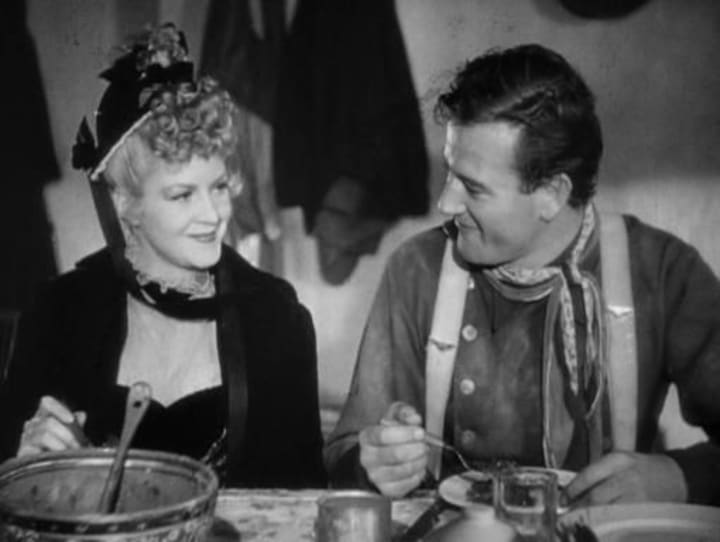
Performance-wise, John Wayne and Claire Trevor are great as Ringo and Dallas. Wayne keeps his performance subtle; much of his character's storytelling comes through his facial expressions and tone of voice. Claire Trevor isn't the melodramatic damsel in distress. She plays Dallas as a woman with a hard edge, who is still vulnerable and empathetic.
Thomas Mitchell plays the drunken Doc Boone, who has to sober up very quickly when fellow passenger Lucy Mallory goes into premature labor. Louise Platt plays Lucy Mallory, and she does a great job as the sort of snobby aristocrat who slowly warms up to other people.
The action is great as well, there are the expected shootouts, of course, but much of the violence happens offscreen...mostly.
Does Stagecoach Stumble?
No...not really. There are a few moments where it's a bit hard to make out what's going on, and there are several instances where you can see supposedly 'dead' guys getting up and dusting themselves off. It was 1939, they didn't have our fancy toys. Still, it's just part of the film's charm. Of course, this is a personal favorite of mine, so I'm probably wilfully blind on this side of the review :) - what? At least I'm honest about it!
Final Thoughts
Overall, Stagecoach is a great time for the whole family. The violence is ridiculously tame in comparison to modern films, making it a great entry point to the genre. If you want to give westerns a shot, but you don't like a lot of violence, this is a good one to start with.
About the Creator
Greg Seebregts
I'm a South African writer, blogger and English tutor; I've published 1 novel and am working on publishing a 2nd. I also write reviews on whatever interests me. I have a YouTube Channel as well where I review books, and manga and so on.
Keep reading
More stories from Greg Seebregts and writers in Geeks and other communities.
007's 8 Coldest Kills
"The name's Bond...James Bond" That line has thrilled audiences since Ian Fleming's first James Bond novel, Casino Royale, was released in 1953. That's seventy-three years of 007! Now, usually, when you think of Bond, a couple of things come to mind, including fast cars, beautiful women, and fancy tailored tuxedos
By Greg Seebregts5 days ago in Geeks
The Politics of Playing Dress-Up
Well, to start off I'd like to say a happy world book day to all who celebrate. I know I haven't really posted anything on my socials about it but I'm not a jubilant kind of person. I lay low most of the time. Let's start off with a popular anecdote from the vaults...
By Annie Kapur20 days ago in Geeks
The Big Book Review: "Thinking, Fast and Slow" by Daniel Kahneman (Pt.3)
Read Parts 1 and 2 here: Welcome back to this series on Thinking, Fast and Slow by Daniel Kahneman, part of the 'Big Book Review' in which we look at sections of a book every month in extreme detail, focusing on what they have to teach us about their topics. Part 3, entitled Overconfidence looks at what businesses, experts and individuals may overlook or misread due to their own faith in themselves. A more extreme and intricate form of the 'Dunning-Kruger Effect'. If you haven't read parts 1 and 2 then I suggest you read those before continuing, of course these articles will cross-reference each other and ideas from previous chapters are not going to be re-explained unfortunately (for the sake of length and word count).
By Annie Kapurabout 10 hours ago in Geeks



Comments
There are no comments for this story
Be the first to respond and start the conversation.