
The Key to the War?
Thinking about the Western Theatre
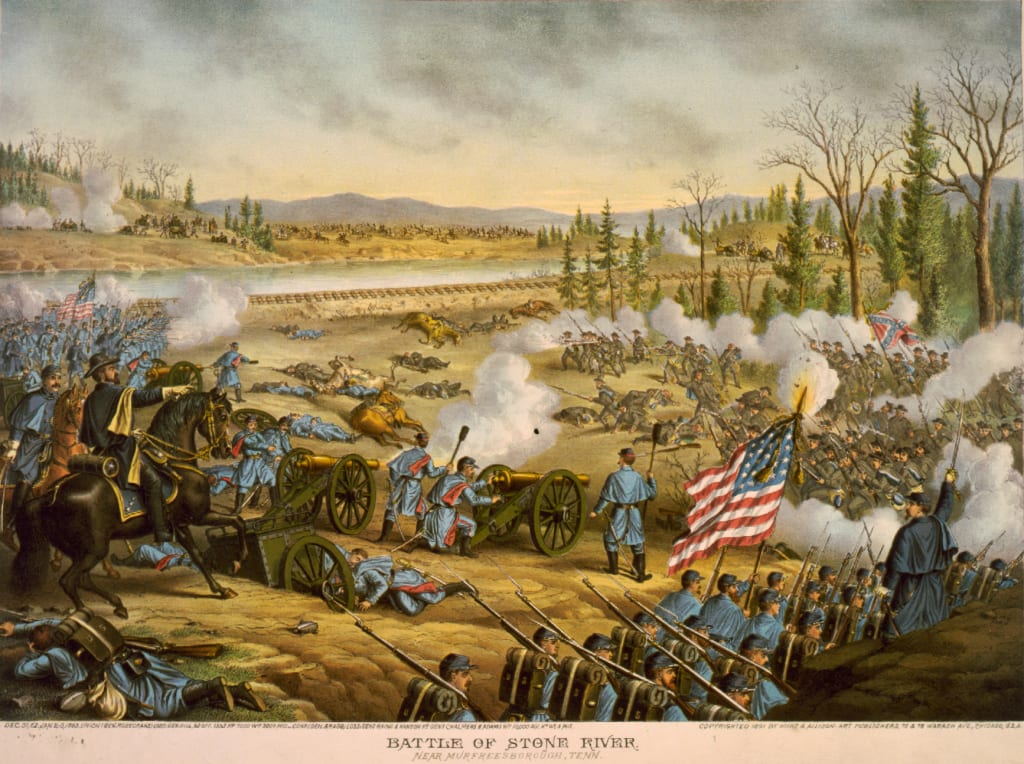
It's been a while since I've posted (again), so I thought I'd do a quick post with just some musings from my recent Civil War history reading.
I've been reading a few books on the Western theatre recently (Jefferson Davis and His Generals: The Failure of Confederate Command in the West by Steven Woodsworth, Atlanta 1864: Last Chance for the Confederacy by Richard McMurray, and I'm currently working on Conquered: Why the Army of Tennessee Failed by Larry Daniel.)
I haven't read much about the Western Theatre - at least compared to the campaigns of the Army of the Potomac. Part of that is due to growing up just a few hours away from Gettysburg and Washington, DC and part is likely just due to the attention the Eastern campaigns receive.
Within the last years as well, however, the Western Theatre has received increased attention from historians - and the three books above are incredibly important additions to the historiography.
It doesn't seem like the Western theatre was going to win the war for the South, but it was where the war could - and was - lost. Rebel decisions from the beginning - Leonidas Polk's decision to violate Kentucky's neutrality, Albert Sidney Johnston's attempts to hold too much land with too few troops, Zollicoffer's death and defeat at the Battle of Mill Springs, and neglecting the importance of Forts Henry and Donelson - were critical in crippling the South's ability to wage successful campaigns west of the Appalachian Mountains. And those were all committed by February of 1862.
Command problems greatly hindered the effort as well. A.S. Johnston, P.G.T Beauregard, Braxton Bragg, Joe Johnston, John Pemberton and John Bell Hood performed poorly at best and in some cases were disasters. The Army of the Tennessee one only one major victory, at Chickamauga in September of 1863. That victory, second only to Gettysburg in total number of casualties, was not followed up allowing the Federal forces to retreat to Chattanooga. By November, the Army of the Tennessee was decisively defeated on the hills overlooking that city - and the campaign for Atlanta would begin the following year.
The reasons for the defeats are almost endless - Poor leadership at the senior levels of the armies, poor coordinator between departments, interference - and sometimes noninterference - from Richmond, inter and intra army feuds, and too few troops to protect everywhere. And of course, the list is even longer than that.
It's not to imply that the South never had a chance in the West, or that a different outcome wasn't possible. But the war in the West did illustrate some structural problems that were inherent in the Confederacy. Senior leadership had a weak bench - there was only one Robert E. Lee, and a lot of also rans. Both army and corps leadership in the Confederacy was shallow. Even in the Army of Northern Virginia, men like Longstreet showed that Corps command was the best he was capable of. Too often available corps commanders in the west were already promoted above their level of competence.
I'll try to keep updating this much more often as I miss writing, so until next time.
About the Creator
Keep reading
More stories from John Marchetti and writers in History and other communities.
Battle of Crampton's Gap
At dawn on September 15, 1862, Union Army Major General William Franklin, commander of the Sixth Corps, peered out across Pleasant Valley towards Harpers Ferry. Arrayed before him, Confederate Brigadier General Lafayette McLaws had deployed a mixed force of six brigades. Franklin “made an examination of the position, and concluded that it would be suicidal to attack it.” Instead, he decided to simply wait and watch the Confederate forces as Harpers Ferry surrendered and Lee began to reunite his army along Antietam Creek.
By John Marchetti4 months ago in History
The Spiritualist Craze That Captivated the World a Century Ago
In the early decades of the 20th century, a strange and compelling belief swept across continents: the idea that the living could speak with the dead. Séances became social events, mediums rose to celebrity status, and ordinary people found themselves drawn into dimly lit rooms, hoping to hear whispers from the beyond. What began as a fringe curiosity evolved into a worldwide cultural phenomenon—one driven as much by emotion as by mystery.
By Irshad Abbasi about 9 hours ago in History




Comments
There are no comments for this story
Be the first to respond and start the conversation.