
The Vikings Who Vanished
Unraveling the mystery of the Norse settlers who disappeared from Greenland without a trace

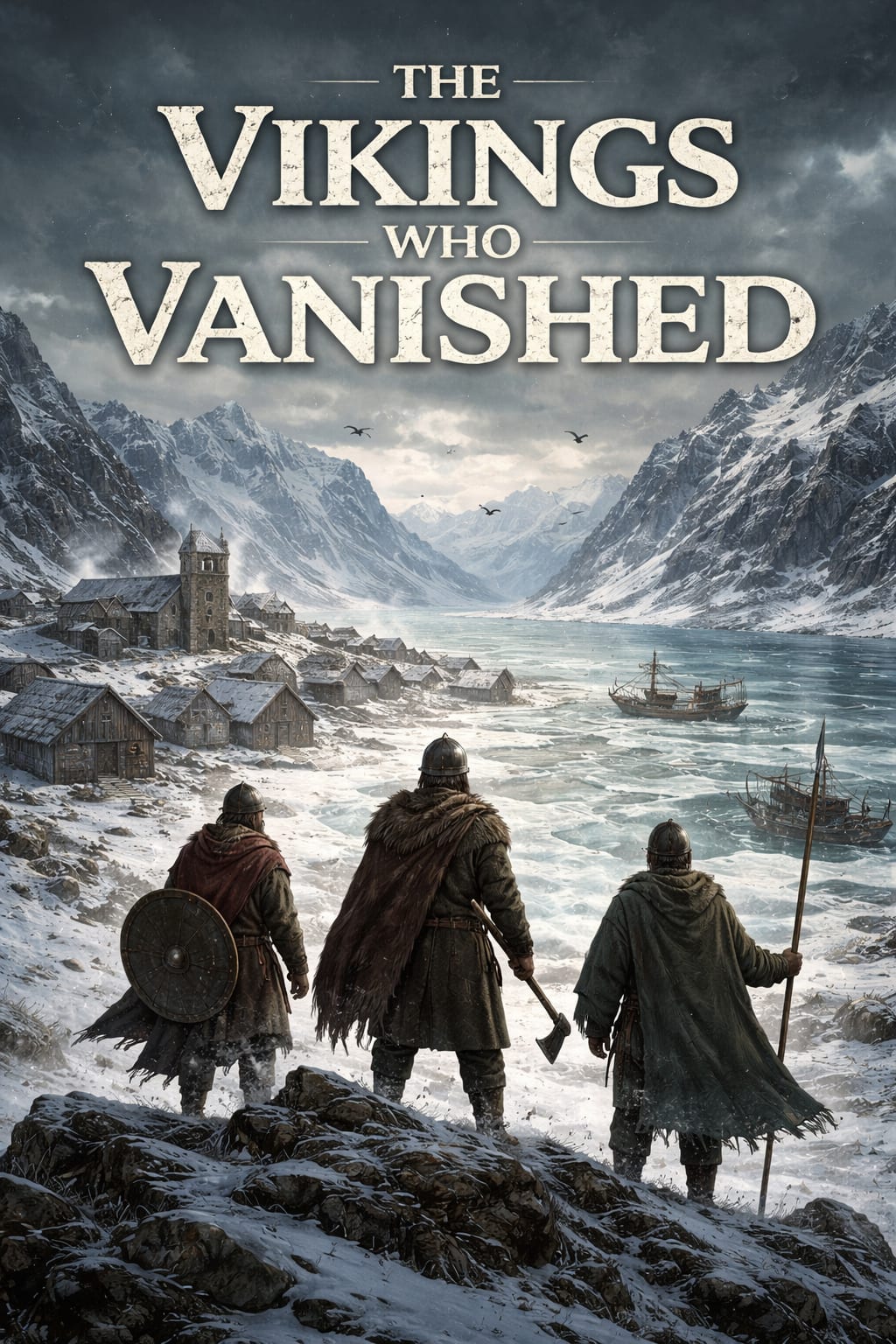
The Vikings are often remembered as fierce warriors, fearless explorers, and skilled seafarers who left their mark across Europe and beyond. From raiding monasteries in England to establishing settlements in Iceland and even reaching North America centuries before Columbus, their legacy is both vast and remarkable. Yet among their many stories, one mystery continues to puzzle historians: the sudden disappearance of the Norse settlements in Greenland.
The story begins around the late 10th century when Erik the Red, a Norse explorer exiled from Iceland, sailed west and discovered a vast, icy land. In an effort to attract settlers, he named it Greenland—a clever marketing tactic despite its harsh climate. Around 985 CE, Erik returned with a fleet of ships carrying settlers who established two main colonies: the Eastern Settlement and the Western Settlement.
For several centuries, these Viking communities survived in one of the most inhospitable environments on Earth. They built farms, raised livestock such as cattle and sheep, and maintained trade connections with Europe. Greenland’s Norse settlers exported valuable goods like walrus ivory, which was highly prized in medieval Europe. In return, they imported iron, timber, and other essentials that were scarce in their frozen homeland.
At their peak, the settlements may have supported a population of up to 2,500 people. Churches were built, including a cathedral at Gardar, and the settlers maintained their Christian faith, remaining culturally tied to Norway and Iceland. However, by the 15th century, all traces of these communities had vanished.
The disappearance of the Greenland Vikings is one of history’s enduring enigmas. Archaeological evidence shows no signs of a single catastrophic event such as war or plague wiping them out suddenly. Instead, their decline appears gradual, raising questions about what forces led to their eventual abandonment.
One major theory centers on climate change. During the early years of settlement, Greenland experienced relatively mild temperatures known as the Medieval Warm Period. However, beginning in the 13th century, the climate grew colder as the Little Ice Age set in. Shorter growing seasons, harsher winters, and expanding sea ice would have made farming and travel increasingly difficult. The Norse reliance on European-style agriculture may have left them ill-equipped to adapt to these changes.
Another factor may have been economic isolation. As Europe’s demand for walrus ivory declined—partly due to the increased availability of elephant ivory—the Greenland settlements lost a key source of income. At the same time, fewer ships from Norway made the dangerous journey to Greenland, reducing the flow of essential supplies. Cut off from trade, the settlers may have struggled to sustain their way of life.
Interactions with the Inuit people, who arrived in Greenland around the same time, also play a role in the mystery. The Inuit were highly adapted to Arctic conditions, relying on hunting, fishing, and innovative survival techniques. While there is some evidence of contact between the two groups, it appears the Norse did not adopt many Inuit practices. This cultural rigidity may have contributed to their downfall, as they failed to adapt to the changing environment.
Some theories suggest conflict between the Norse and Inuit populations, but there is little concrete evidence of widespread violence. Others propose that the settlers simply abandoned Greenland, returning to Iceland or Norway in search of better opportunities. However, records of such a migration are scarce, leaving this theory unconfirmed.
Archaeological discoveries provide haunting glimpses into the settlers’ final days. Excavations of farms show signs of declining living conditions, including malnutrition and the consumption of less desirable food sources like seals instead of livestock. In some sites, valuable items were left behind, suggesting a hurried or desperate departure.
The last written record of the Greenland Norse comes from a wedding held in 1408 at a church in the Eastern Settlement. After that, silence. When European explorers returned to Greenland in the 16th century, they found no trace of the Viking communities—only ruins slowly being reclaimed by the Arctic landscape.
Today, the fate of the Greenland Vikings serves as a powerful reminder of the challenges of survival in extreme environments. Their story highlights the importance of adaptability, resilience, and the ability to respond to changing . While the exact reasons for their disappearance may never be fully known, the mystery continues to captivate historians and inspire new research.
In the end, the Vikings who vanished did not simply fade into legend—they left behind a cautionary tale etched into the icy wilderness of Greenland, waiting for us to understand it.
About the Creator
Irshad Abbasi
Ali ibn Abi Talib (RA) said 📚
“Knowledge is better than wealth, because knowledge protects you, while you have to protect wealth.
Keep reading
More stories from Irshad Abbasi and writers in History and other communities.
What Really Happened to the Library of Alexandria
The Library of Alexandria, situated in the ancient Egyptian city of Alexandria, has long captured the imagination of historians, scholars, and storytellers alike. Often depicted as the pinnacle of human knowledge in antiquity, the library allegedly housed hundreds of thousands of scrolls, chronicling the achievements, philosophies, and histories of civilizations from across the Mediterranean and beyond. Yet, despite its legendary status, the fate of the Library of Alexandria remains shrouded in mystery, with multiple theories attempting to explain its disappearance.
By Irshad Abbasi a day ago in History
Musashi Miyamoto: The Samurai Who Fought His Last Duel in His Mind
1. The Undefeated Monster and the Zero Point Ask anyone around the world to name a famous Japanese samurai, and the first name to surface will almost certainly be Miyamoto Musashi. We know the core myth: the undefeated duelist who won sixty-one life-and-death encounters, the eccentric giant who carved his own wooden sword to defeat his greatest rival, Sasaki Kojiro.
By Takashi Nagayaa day ago in History



Comments
There are no comments for this story
Be the first to respond and start the conversation.