
Eat Smarter, Feel Better
The Simple Power of EAAs

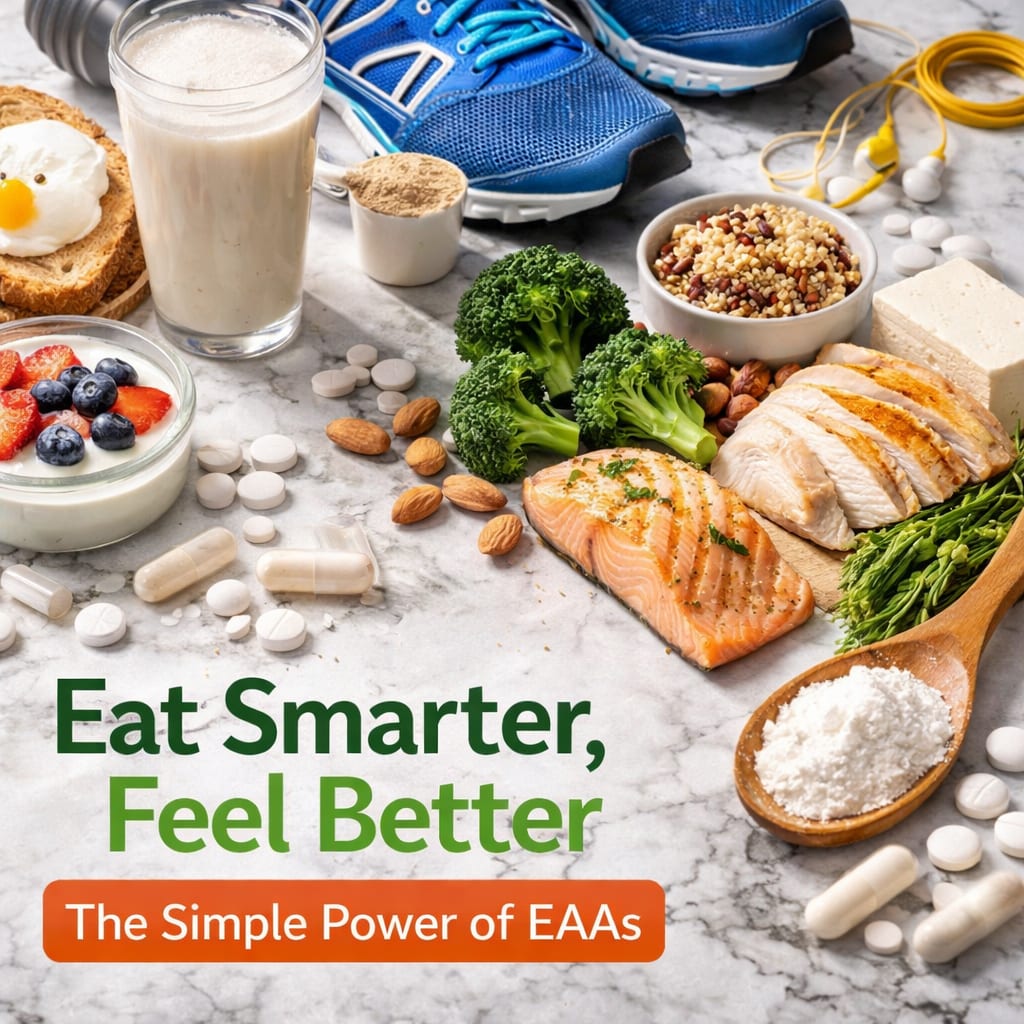
One expert tells you to eat more protein. Another says your diet is missing something important. Then social media jumps in with powders, pills, drinks, and routines that somehow require more time, more money, and more mental energy than most people actually have.
At some point, the average person stops trying to optimize and just tries to survive the week.
That is why essential amino acids are worth talking about in a simpler way.
You do not need a science degree to understand them, and you definitely do not need to turn your kitchen into a supplement lab. Essential amino acids are just a basic part of how your body works.
>> here the the overall best amongst the rest over the counter<<
They help support the building and repair jobs your body handles every day. If you eat protein, exercise, recover, work long hours, or simply want to feel a little less worn down by modern life, this is one of those topics that can actually be useful.
Not trendy-useful. Real-life-useful.
What essential amino acids are in plain English
Amino acids are the building blocks of protein. Your body uses them to build and maintain muscle, tissues, enzymes, and other important parts of daily function. There are nine amino acids called “essential” because your body cannot make them on its own. You have to get them from food or supplement.
That is the whole idea.
The complicated names are less important than the practical takeaway: if your body does not get enough of these building blocks, it has less support for repair, maintenance, and recovery.
That does not mean you will immediately fall apart because you missed one good lunch. It just means nutrition matters more than people often think, especially when life gets busy and convenience starts replacing quality.
Why this matters in everyday life
Most people do not wake up wondering whether they are getting enough essential amino acids. They wake up tired, skip breakfast, power through work, snack randomly, eat something rushed at night, and then wonder why they feel off.
Sometimes the answer is stress. Sometimes it is poor sleep. Sometimes it is too much caffeine and not enough actual food. And sometimes it is that the body is simply underfed in the nutrients it relies on to function well.
>>VERY IMPORTANT<< Click below to order the most advanced essential amino acids supplement for you body today
Essential amino acids matter because they support some of the most basic but important parts of daily life:
muscle repair after movement or exercise
recovery after physically demanding days
support for staying strong as you age
better quality protein intake overall
more thoughtful meal planning for busy schedules
That is not flashy, but it is useful. And Lifehack readers tend to appreciate things that actually make life run better.
The biggest mistake people make
The biggest mistake is assuming “I ate something” automatically means “I nourished myself well.”
A muffin and coffee may get you out the door. Chips and a soda may technically count as lunch. Instant noodles at midnight may feel like dinner. But none of those choices do much to support your body in a meaningful way.
This is where essential amino acids become a smart filter for your routine. Instead of asking, “Did I eat?” try asking, “Did I give my body something that actually supports it?”
That one question improves a lot of decisions.
It makes you think more carefully about protein quality. It nudges you toward more balanced meals. It helps you notice when your diet is running on convenience alone. And it can make “healthy eating” feel less abstract and more practical.
A simple lifehack: build meals around protein first
If you want the easiest way to make essential amino acids more relevant in daily life, here it is: build your meals around a solid protein source first.
Not in an obsessive way. Just in a practical one.
Instead of starting with bread, snacks, or whatever is fastest, start by asking what the protein is. Eggs? Greek yogurt? Chicken? Fish? Tofu? Beans and rice? Cottage cheese? Lentils? Edamame? A protein-rich leftovers bowl?
Once that is covered, the rest of the meal gets easier.
This works because many protein-rich foods naturally provide essential amino acids. You do not have to count each one individually at every meal. You just need a routine that makes better protein intake more consistent.
That is the kind of change that saves energy later. You feel more prepared, less random, and less likely to hit the day like your body is running on fumes.
Busy people do not need perfection. They need repeatable habits
A lot of wellness advice fails because it asks people to become different people overnight. Suddenly you are expected to meal prep like a fitness coach, grocery shop like a dietitian, and track nutrition like a scientist.
Most people do not need that. They need repeatable habits.
Here are a few realistic examples:
Keep easy protein options at home.
Things like eggs, canned tuna, yogurt, cottage cheese, tofu, tempeh, frozen edamame, rotisserie chicken, or protein-rich soups can make meals faster without turning every dinner into a project.
Make your breakfast less weak.
A breakfast that includes real protein usually supports your day better than one that is mostly sugar and caffeine.
Stop treating lunch like an afterthought.
A more balanced lunch can help prevent that late-day crash where everything feels harder than it should.
Pair convenience with quality.
Convenience is not the enemy. Low-support eating is. A quick meal can still be a smart meal.
These are not dramatic hacks, but they are the kind that hold up in real life.
What about supplements?
This is where people often get pulled into extremes.
Essential amino acid supplements can be useful in certain situations. Some people like them around workouts, during travel, or when their meals are inconsistent. But supplements are not the first solution to every problem, and they should not be framed like a replacement for real food.
For most people, food is the better foundation.
Supplements can sometimes be a convenience tool, not a miracle tool. That distinction matters. It keeps expectations realistic and helps avoid the all-too-common cycle of buying something expensive instead of fixing the obvious gaps in daily habits.
And as always, anyone with medical concerns, special dietary needs, pregnancy, breastfeeding, or ongoing symptoms should speak with a qualified healthcare professional before starting something new.
That is not a buzzkill. That is just responsible advice.
What essential amino acids cannot do
They cannot make up for terrible sleep.
They cannot outwork chronic stress.
They cannot magically turn a chaotic lifestyle into a healthy one.
They cannot replace balanced meals, hydration, movement, or common sense.
But they can be part of a smarter system.
That is the real value here. Essential amino acids are not exciting because they promise instant transformation. They are useful because they remind you to support the body you use every single day.
The smartest takeaway
If you are busy, overwhelmed, or tired of wellness content that sounds like a full-time job, here is the simplest takeaway: do not overcomplicate nutrition.
You do not need to become perfect. You do not need to memorize every amino acid name. You do not need a new powder every week.
You just need to get more intentional about feeding your body well.
Essential amino acids matter because your body depends on them, whether you are building strength, recovering from workouts, staying energized through long workdays, or simply trying to feel a little more functional and less depleted.
That is what makes them a Lifehack topic.
Not because they are trendy.
Because they are useful.
And useful is what actually lasts.
About the Creator
Edward Smith
I can write on ANYTHING & EVERYTHING from fictional stories,Health,Relationship etc. Need my service, email [email protected] to YOUTUBE Channels https://tinyurl.com/3xy9a7w3 and my Relationship https://tinyurl.com/28kpen3k
Keep reading
More stories from Edward Smith and writers in Lifehack and other communities.
DIY Herbal Remedies Anyone Can Make
There's something deeply satisfying about growing your own medicinal herbs. For centuries, our ancestors relied on backyard gardens not just for food, but for natural remedies that supported their health and well-being.
By Edward Smith24 days ago in Lifehack
A Visitor's Guide To Victorian England
A Book Review Being interested in all things Victorian, I am constantly looking for books on the Victorian Era. In fact, I should admit that I am obsessed about ‘all things Victorian’. From the clothes worn by men and women, rich or poor, to how they lived, where they lived, what they ate and would (or would not ) drink, what kind of transport there was, who worked where, who went to school (and who didn’t), the list really is endless.
By Ruth Elizabeth Stiff7 days ago in BookClub




Comments
There are no comments for this story
Be the first to respond and start the conversation.