
UAE Gas Field Set Ablaze as Iran Strikes Squeeze Energy Supplies
Regional conflict widens as energy infrastructure becomes a key target in the struggle for economic leverage
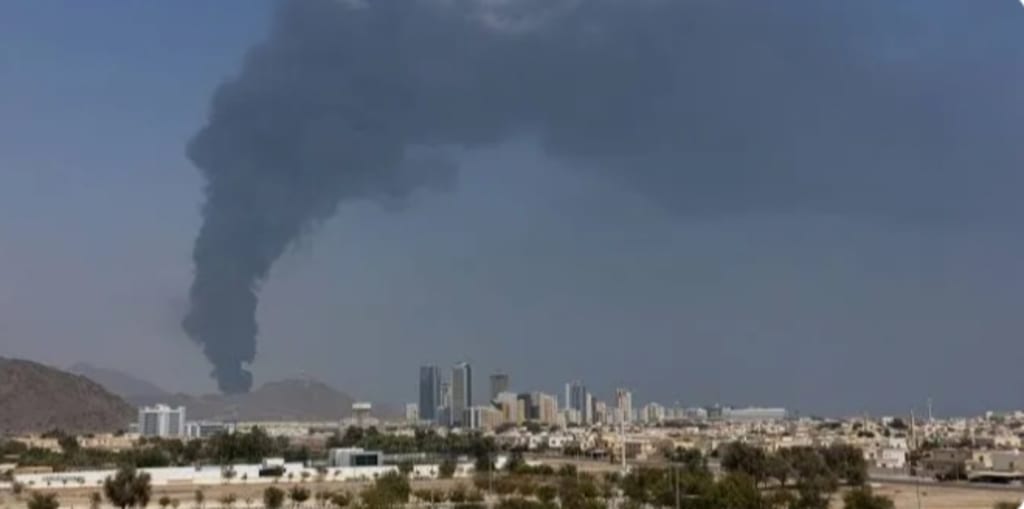
The Middle East has once again become the center of global attention as tensions escalate across the Persian Gulf. A major gas field in the United Arab Emirates was reportedly set ablaze following a strike attributed to Iran, raising concerns that the ongoing regional conflict is expanding into a broader campaign targeting energy supplies.
The incident has sent shockwaves through global markets and intensified fears that vital oil and gas infrastructure across the Gulf may become increasingly vulnerable. For a world already grappling with economic uncertainty, disruptions to energy production in one of the most critical supply regions could have far-reaching consequences.
This latest strike signals a dangerous shift in the conflict’s dynamics. Instead of focusing solely on military targets, attacks are increasingly aimed at economic infrastructure that powers global trade and industry.
Energy Infrastructure Becomes a Battlefield
Energy facilities in the Gulf have long been considered strategic assets—and therefore potential targets during times of conflict. The UAE, one of the region’s leading producers of oil and natural gas, plays an important role in supplying energy to international markets.
When a gas facility catches fire due to a strike, the consequences extend far beyond the immediate damage. Production may be interrupted, exports delayed, and global prices pushed higher.
The UAE has invested billions of dollars in advanced infrastructure to maintain its position as a reliable energy supplier. Facilities across the country process natural gas, refine petroleum products, and export energy resources to customers around the world.
A strike on such a facility therefore represents not just a security challenge but a direct threat to the country’s economic stability.
The fire reported at the gas field quickly drew emergency crews and security forces to the area. Authorities moved swiftly to contain the blaze and prevent it from spreading to nearby installations.
While the full extent of the damage remains unclear, the symbolic impact is already significant.
Iran’s Pressure Strategy
Analysts say the attack reflects a broader Iranian strategy designed to exert economic pressure on rival nations and their allies.
By targeting energy infrastructure, Tehran can send a powerful message to global markets: the flow of oil and gas from the Gulf is not guaranteed during times of conflict.
Iran has long warned that if it faces military pressure from adversaries, it could respond by threatening regional energy supplies. Such a strategy is particularly effective because the Gulf region remains one of the most important energy hubs in the world.
Even small disruptions can cause price spikes and market instability.
The region’s energy network is deeply interconnected. Pipelines, shipping terminals, refineries, and gas processing plants work together to move resources from the ground to international buyers.
When any part of that system is threatened, the ripple effects can be felt across the entire supply chain.
The Strategic Importance of the Gulf
One reason the situation has attracted global concern is the strategic importance of nearby shipping routes.
The Strait of Hormuz—a narrow waterway connecting the Persian Gulf to international waters—serves as a vital corridor for global energy exports. A significant portion of the world’s oil and liquefied natural gas shipments pass through this route every day.
Countries such as Saudi Arabia, Kuwait, and the Qatar rely heavily on this passage to deliver energy supplies to international markets.
If the conflict continues to threaten infrastructure or shipping routes in the region, the impact could be felt across Europe, Asia, and North America.
Energy markets tend to react quickly to geopolitical risks. Even the possibility of supply disruptions can push prices upward as traders attempt to anticipate future shortages.
Economic Consequences Around the World
The attack on the UAE gas facility has already contributed to rising volatility in energy markets.
Oil traders closely monitor events in the Gulf because the region produces a large share of the world’s petroleum. When tensions rise, prices often climb as investors worry about potential supply shortages.
Natural gas markets are also affected. Many countries rely on imported gas from the Gulf to power industries, generate electricity, and heat homes.
Higher energy prices can have a cascading effect across the global economy. Transportation costs increase, manufacturing becomes more expensive, and inflation pressures grow.
For governments and consumers alike, such developments can create serious financial challenges.
Regional Security on High Alert
The strike has prompted Gulf nations to strengthen security around key energy installations.
Facilities that produce or process oil and gas are now considered high-priority targets for defense systems designed to intercept missiles and drones.
Over the past decade, drone technology has become a growing concern for governments around the world. These unmanned aircraft can travel long distances, carry explosive payloads, and evade traditional radar systems.
As a result, protecting large industrial sites from such threats has become increasingly complex.
Countries throughout the Gulf region are now investing heavily in surveillance systems, air defenses, and cybersecurity measures to safeguard their critical infrastructure.
A Fragile Energy Balance
The global energy system depends on stability in regions like the Persian Gulf. When conflict disrupts production or transportation networks, the consequences can extend far beyond the immediate area.
Energy security has become one of the defining geopolitical issues of the modern era. Governments are constantly balancing economic needs with strategic concerns about supply reliability.
The attack on the UAE gas facility serves as a reminder of just how fragile that balance can be.
As tensions between Iran and its regional rivals continue to unfold, the future of energy stability in the Gulf remains uncertain.
For the international community, the stakes could hardly be higher. The world’s energy supply—and the economic stability that depends on it—may increasingly hinge on whether the region’s escalating conflict can be contained.
About the Creator
The Forsyth House Fire
Since 1851, Forsyth House has stood on the corner of Union Street and Gordon Street in the heart of Glasgow. Its iconic, or was... because on Sunday 8th of March, 2026, a fire broke out in a small, seemingly un-named shop in the building and tore all that history down. As I write, the rubble is still unsettled and the street is still blocked off. Central Station is quiet on the upper level, and around 30 small businesses have quite literally gone up in smoke.
By S. A. Crawford4 days ago in The Swamp
Two Killed in Oman by Drones, Several Also Fired at Saudi Arabia
A series of drone attacks in the Gulf region has claimed the lives of two people in Oman and triggered heightened security alerts in neighboring Saudi Arabia, officials said. The incidents underscore growing concerns about the use of unmanned aerial vehicles (UAVs) in the region, as well as the potential for escalating tensions amid ongoing geopolitical rivalries. According to Omani authorities, the fatal drone strikes targeted a facility near the city of Salalah, causing structural damage and resulting in two confirmed deaths. Several other individuals sustained injuries, though the full extent of casualties has not yet been released. Emergency services were deployed quickly, and security forces are investigating the origin of the drones and whether additional threats remain in the area. Officials in Saudi Arabia reported that multiple drones were fired toward its southern provinces at roughly the same time, though no casualties were immediately confirmed. Saudi air defense systems were reportedly activated to intercept some of the UAVs, and military officials are coordinating with regional partners to assess potential vulnerabilities. The use of drones in cross-border attacks has become an increasing concern in the Gulf region, where strategic infrastructure, including oil facilities, ports, and military installations, is considered at risk. Security analysts note that drones are increasingly being used as tools for asymmetric warfare, capable of delivering precision strikes with limited warning and minimal risk to operators. Experts have suggested that the sophistication of the drones involved points to state or well-funded non-state actors. “The technology and accuracy required for such attacks indicate careful planning and access to advanced UAV systems,” said one Gulf security analyst. “This is not a random or isolated incident.” Regional governments are now reviewing their defense and surveillance systems in response to the strikes. Oman has reportedly deployed additional air defense units, while Saudi authorities have heightened border monitoring and reinforced protection around key infrastructure. Both nations are working closely with regional and international intelligence agencies to determine the origins of the attacks and prevent further incidents. The drone strikes come amid heightened geopolitical tensions in the Middle East, particularly in the context of ongoing conflicts and rivalries involving regional powers. Analysts warn that the incidents could escalate if not addressed promptly, with the risk of retaliatory actions and broader destabilization. In addition to immediate security concerns, the attacks have prompted economic and logistical disruptions. Ports and transport hubs in affected areas have temporarily suspended operations, while energy markets are monitoring the situation for potential impact on oil and gas exports. The Gulf remains a critical hub for global energy, making any threat to infrastructure a significant international concern. Omani authorities have appealed for calm, urging residents to follow official guidance and avoid affected areas. Meanwhile, Saudi officials have stressed that their air defenses are fully operational and that measures are in place to ensure civilian safety. Both governments have emphasized the need for regional cooperation to counter the growing threat posed by drones. The incidents have also sparked discussions about the evolving nature of modern warfare. Analysts point out that UAVs allow actors to bypass traditional military defenses, carry out targeted attacks, and create strategic pressure without engaging in conventional combat. This has forced countries in the Gulf and beyond to reassess the security of critical installations and adapt to new technological threats. International observers have called for de-escalation and diplomatic engagement to prevent further loss of life. The attacks highlight the vulnerability of civilian and military sites in conflict-prone regions and underscore the need for enhanced surveillance, intelligence-sharing, and defense coordination. For Oman and Saudi Arabia, the events serve as a stark reminder of the changing security landscape in the Gulf. As drones and other unmanned systems become more accessible and sophisticated, governments must respond with robust defense measures, intelligence efforts, and regional cooperation to maintain stability. Authorities continue to investigate the incidents, and regional leaders have pledged to hold accountable those responsible. Analysts suggest that the coming weeks will be critical in determining whether the drone attacks mark an isolated escalation or a new phase in regional tensions that could affect the broader Gulf security environment.
By Fiaz Ahmed 4 days ago in The Swamp
A System That Isn’t Working Challenge Winners
Systems promise order. They organize behavior, distribute opportunity, and suggest that if everyone follows the rules, things will work. The entries in A System That Isn’t Working look closely at what happens when that promise begins to slip.
By Vocal Curation Team6 days ago in Resources



Comments
There are no comments for this story
Be the first to respond and start the conversation.