
Rich vs Poor Thinking — The 9 Differences That Change Everything
How mindset shapes financial destiny and the habits that separate wealth from struggle


Wealth is often misunderstood. Many people believe it’s determined purely by luck, inheritance, or income level. The truth is far more nuanced. The way you think about money, opportunity, risk, and effort directly shapes your financial outcomes. People who struggle with finances often share a set of limiting beliefs and habits, while those who build wealth consistently adopt a completely different mental framework.
Let's explore the nine fundamental differences between “rich thinking” and “poor thinking” and explains how adopting the mindset of the wealthy can transform your life. Each principle is accompanied by practical examples and actionable steps you can take today.
1. Mindset on Money: Abundance vs Scarcity
At the core of wealth is mindset. People with a scarcity mindset see money as limited. Every dollar must be guarded fiercely, and opportunities feel rare. They may avoid investing, hesitate to start businesses, or fear spending on learning and growth.
Rich Thinking: Wealthy individuals see money as a tool—a resource to generate more money. They believe opportunities exist and that income can grow with strategy and effort.
Example: Consider two coworkers. One receives a bonus of $500. The scarcity-minded person splurges immediately on a night out or small luxury. The abundance-minded person invests it in learning a new skill or stocks, understanding the long-term potential. Over years, these small differences compound into substantial wealth.
Actionable Tip: Start viewing every dollar as a resource. Ask yourself, “How can this money work for me?” before spending it.
2. Risk Perception: Fear vs Calculated Action
Fear of loss prevents many from achieving financial freedom. Poor thinking avoids risk entirely, relying on the safety of predictable, low-paying jobs or conventional paths. This leads to slow growth and missed opportunities.
Rich Thinking: Wealthy individuals take calculated risks. They evaluate probabilities, prepare for contingencies, and take actions others avoid. This doesn’t mean reckless behavior—it means informed decision-making.
Example: A person with a fear-based mindset might avoid investing in stocks. A calculated thinker researches, diversifies, and invests strategically. While both may experience short-term losses, only the risk-takers are positioned for long-term gains.
Actionable Tip: Start small. Test calculated risks with manageable amounts. Track results and learn. Over time, risk-taking becomes measured, not reckless.
3. Focus on Assets vs Liabilities
Many people confuse spending with investing. Poor thinking prioritizes consumption—luxury cars, expensive gadgets, and trendy clothes—while ignoring investments that generate returns.
Rich Thinking: Wealthy people focus on assets: real estate, stocks, businesses, intellectual property—anything that increases in value or produces income. They understand that liabilities can drain resources if not carefully managed.
Example: Someone buys a $20,000 car that loses value quickly. Another invests $20,000 in a dividend-paying stock portfolio or a small rental property. Over time, the second individual grows wealth passively while the first experiences depreciation.
Actionable Tip: List your expenses. Classify each as an asset or liability. Aim to allocate at least 50% of discretionary spending toward assets that generate income or appreciate.
4. Long-Term Vision vs Short-Term Gratification
Short-term pleasures feel rewarding but rarely build wealth. Poor thinkers prioritize immediate satisfaction—expensive meals, impulse purchases, vacations.
Rich Thinking: Wealthy individuals delay gratification. They understand that small sacrifices today lead to exponential rewards in the future.
Example: Choosing to save $10 daily by brewing coffee at home rather than buying a $5 coffee outside may seem trivial. Over a year, this habit alone saves over $1,800—money that can be invested or used to start a small business.
Actionable Tip: Implement “30-day rules” for non-essential purchases. If you want something, wait 30 days to see if the desire persists.
5. Learning and Self-Education
Poor thinkers rely solely on formal education and job-based skills. They rarely invest in self-development, assuming school and experience are enough.
Rich Thinking: Lifelong learning is non-negotiable. Wealthy people continuously study markets, learn new skills, read books, attend seminars, and experiment. They know knowledge multiplies income opportunities.
Example: A small business owner spends 1 hour daily learning digital marketing through online courses. Within months, their advertising ROI improves drastically, increasing profits. Without ongoing education, they’d rely on outdated methods and stagnant growth.
Actionable Tip: Dedicate at least 30 minutes daily to financial education—reading, courses, or mentorship. Small, consistent learning compounds like interest in a bank account.
6. Networking and Influence
Isolation limits opportunities. Poor thinkers underestimate the power of connections. They work alone and rarely seek mentors or strategic partnerships.
Rich Thinking: Wealthy people understand leverage comes from people. They cultivate relationships with mentors, peers, and influencers. Networking creates opportunities, partnerships, and insights unavailable to those who work in isolation.
Example: A professional joins a mastermind group of entrepreneurs. One connection leads to a collaborative business venture generating $50,000 annually—an opportunity that wouldn’t exist without networking.
Actionable Tip: Attend events, join online communities, and seek mentors in your industry. Even small connections can open doors to major financial opportunities.
7. Mindset on Failure: Blame vs Responsibility
Blaming circumstances, bosses, or luck is common among poor thinkers. This externalization prevents learning and growth.
Rich Thinking: Wealthy individuals take responsibility for outcomes, viewing failures as lessons. They analyze mistakes, adjust strategies, and persist.
Example: A startup fails. The blame-focused person gives up, assuming the market was unfair. The responsibility-focused entrepreneur studies why the failure occurred, adjusts the model, and launches a more successful venture.
Actionable Tip: For every setback, write down lessons learned and the steps you can take to improve next time. Shift focus from blame to growth.
8. Income Sources: Single vs Multiple Streams
Relying on a single paycheck is risky. Poor thinkers depend entirely on one income source, leaving them vulnerable to layoffs, market shifts, or emergencies.
Rich Thinking: Wealthy individuals diversify income streams—investments, rental properties, side businesses, digital products, royalties. Multiple streams provide security and accelerate wealth growth.
Example: Someone with a full-time job also invests in dividend stocks and rents out a property. Even if the job income stops temporarily, they maintain cash flow and continue building wealth.
Actionable Tip: Identify one additional income stream you can start with minimal investment—freelancing, digital products, or passive income investments.
9. Time Valuation: Spending vs Investing
Time is the ultimate resource. Poor thinkers spend time reactively—watching TV, scrolling social media, or completing low-value tasks.
Rich Thinking: Wealthy people invest time strategically in activities that grow wealth, skills, or influence. They understand that time compounding can be more valuable than money compounding.
Example: Spending an hour daily improving business skills or writing content for an online venture generates far higher long-term returns than passive entertainment.
Actionable Tip: Track your time for one week. Identify low-value activities and reallocate at least 2–3 hours daily to skill-building, income-generating, or strategic planning activities.
Transforming Your Mindset, Transforming Your Life
Wealth isn’t only about money—it’s about how you think and act. By identifying these nine differences and intentionally adopting the mindset of the wealthy, you can change your financial trajectory.
Action Steps:
Audit your current mindset and daily habits.
Start small with mindset shifts and deliberate actions.
Prioritize assets, education, and calculated risks.
Build multiple income streams and network strategically.
Treat time as an investment, not a disposable resource.
Adopting these principles doesn’t create instant millionaires—but it sets a foundation for consistent wealth growth. Over months and years, small, intentional shifts compound into substantial results, separating those who struggle financially from those who thrive.
Financial freedom begins in the mind. Change your thinking, and your financial reality will follow.
About the Creator
Algieba
Curious observer of the world, exploring the latest ideas, trends, and stories that shape our lives. A thoughtful writer who seeks to make sense of complex topics and share insights that inform, inspire, and engage readers.
Australia Industrial Filtration Market: Driving Cleaner Industries and Sustainable Growth
Australia’s industrial landscape is evolving rapidly, with sustainability, efficiency, and regulatory compliance becoming central to operations. At the core of this transformation is the industrial filtration market—an essential segment that ensures clean air, safe water, and efficient industrial processes.
By Rashi Sharma4 days ago in Trader
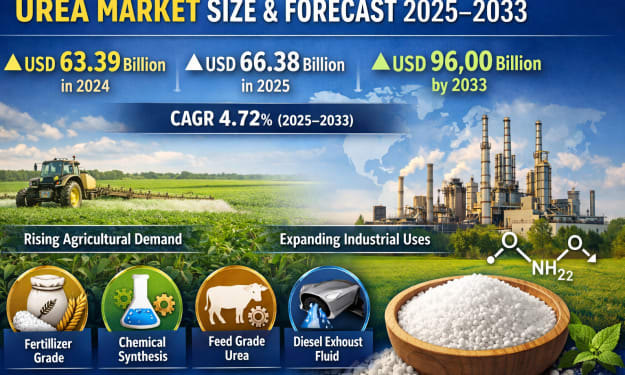
Urea Market Size and Forecast 2025–2033
Global Urea Market Overview The global urea market is witnessing steady growth as agricultural expansion and industrial development continue to drive demand worldwide. According to market research insights, the global urea market was valued at USD 63.39 billion in 2024 and is expected to grow to USD 66.38 billion in 2025, eventually reaching USD 96.00 billion by 2033. This growth represents a compound annual growth rate (CAGR) of 4.72% between 2025 and 2033.
By shibansh kumar7 days ago in Trader
Turquoise Clouds in a Green Sky
“I always remember the first time I saw the green sky and the turquoise clouds skating across it.” These words had stayed with Alice Barrett for two years. She’d been six- years-old and snuggled next to her great-grandmother, known to nearly all the family as Granny Rose, on a large, rather uncomfortable armchair. Granny Rose had been telling her a story, at least that’s what Alice believed, but it was a strange memory, blurry apart from those few words.
By Matthew Batham3 days ago in Fiction



Comments
There are no comments for this story
Be the first to respond and start the conversation.