
What is AI?
Artificial Intelligence Explained

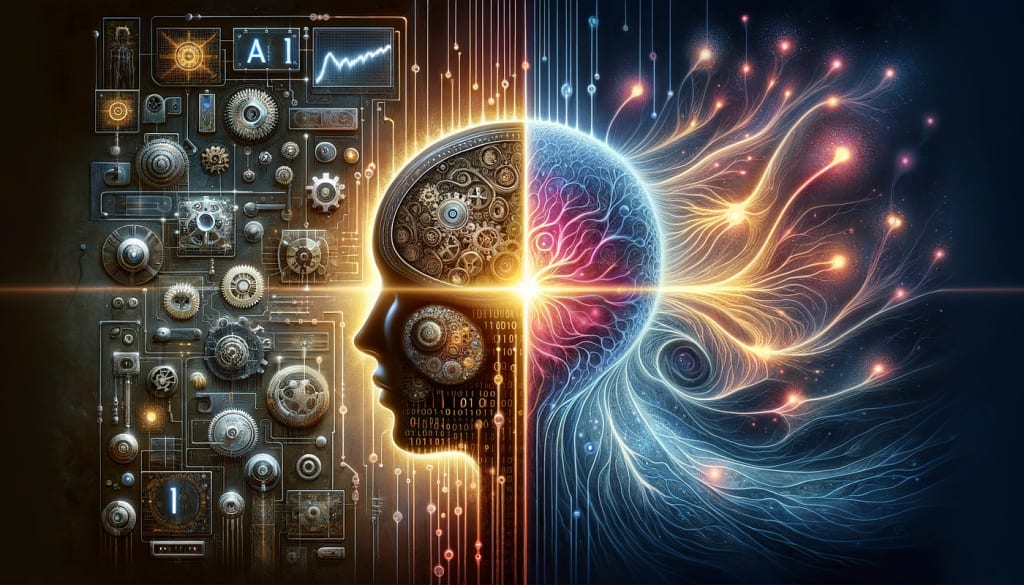
Created with the help of ChatGPT and Grok AI.
What Is AI? A Clear, No-Nonsense Guide to Artificial Intelligence
Artificial intelligence is everywhere right now—powering search engines, writing content, recommending what you watch, and even helping doctors diagnose disease. Yet despite how often we hear about it, most people still aren’t entirely sure what AI actually is.
So let’s cut through the noise and explain it clearly, simply, and honestly.
If you’ve ever wondered what AI is, how it works, and why it matters so much right now, this guide will walk you through everything you need to know.
What Is AI?
Artificial Intelligence (AI) refers to computer systems that can perform tasks that normally require human intelligence.
These tasks include understanding language, recognizing images, making decisions, and learning from experience.
In simple terms, AI is software that can analyze information and respond in ways that resemble human thinking.
But here’s the important distinction:
AI does not think or feel like a human. It processes patterns, data, and probabilities at a massive scale.
Why AI Feels Like It Suddenly Took Over
AI has actually been around since the 1950s. Researchers at major institutions like MIT and Stanford have been working on it for decades.
So why does it feel new?
Three major shifts changed everything:
First, we now have enormous amounts of data from the internet.
Second, computers have become powerful enough to process that data quickly.
Third, breakthroughs in machine learning have made AI dramatically more accurate.
The result is what you’re seeing today—AI that feels fast, useful, and sometimes even human-like.
The Three Types of AI
Not all AI is the same. In fact, most of what people call “AI” today falls into just one category.
Narrow AI (also called Weak AI)
This is the only type of AI that currently exists.
It is designed to perform specific tasks, such as:
* Writing text (like ChatGPT)
* Recommending videos or products
* Navigating routes in Google Maps
* Recognizing faces or voices
Narrow AI is powerful, but it does not truly understand what it’s doing. It follows patterns.
General AI (AGI)
Artificial General Intelligence would be able to think, reason, and learn across many different areas—just like a human.
It could switch from writing an essay to solving a math problem to understanding emotions without needing separate training.
This type of AI does not exist yet.
Superintelligent AI
This is theoretical and often discussed in science fiction.
It would exceed human intelligence in every way—creativity, reasoning, emotional understanding, and more.
While researchers debate its possibility, it remains speculative.
How AI Actually Works
At its core, AI is built on three things: data, algorithms, and training.
Data
AI systems learn from massive datasets—text, images, videos, and user interactions.
The quality and quantity of this data directly impact how well the AI performs.
Algorithms
Algorithms are the mathematical systems that process data.
Modern AI relies heavily on neural networks, which are loosely inspired by how the human brain works. These networks identify patterns and relationships within data.
Training
Training is the process of feeding data into an AI system and adjusting it until it produces accurate results.
This is done through repeated cycles of prediction and correction.
Over time, the system becomes better at recognizing patterns and generating useful outputs.
Machine Learning vs Artificial Intelligence
These terms are often used interchangeably, but they’re not exactly the same.
Artificial Intelligence is the broader concept of machines performing intelligent tasks.
Machine Learning is a subset of AI that allows systems to learn from data instead of being explicitly programmed.
Think of machine learning as the engine that powers most modern AI.
Where You See AI in Everyday Life
AI is already deeply integrated into daily life, often in ways people don’t notice.
- Search Engines
- Google uses AI to understand what you mean, not just what you type.
- Social Media
- AI decides what content appears in your feed based on your behavior.
- Healthcare
AI helps analyze medical scans, detect patterns in patient data, and assist in research.
Finance
Banks use AI for fraud detection, credit scoring, and automated decision-making.
Streaming Platforms
Netflix and Spotify use AI to recommend content based on your preferences.
Common Misconceptions About AI
There’s a lot of confusion around what AI can and cannot do.
AI understands like humans
It doesn’t. AI recognizes patterns in data—it does not have awareness or consciousness.
AI is always accurate
AI can make mistakes, generate incorrect information, and reflect biases in its training data.
AI will replace all jobs
AI will change jobs, automate some tasks, and create new opportunities. It’s more of a shift than a total replacement.
The Risks and Ethical Concerns
AI is powerful, and with that comes real concerns.
Researchers and organizations like the U.S. National Institute of Standards and Technology (NIST) and the European Commission are actively studying issues such as:
Bias in algorithms
Privacy and surveillance
Misinformation and deepfakes
Job disruption
Autonomous decision-making
These are not theoretical problems—they are already happening and being addressed in real time.
The Future of AI
AI will continue to evolve rapidly, but here’s the grounded reality:
Narrow AI will become more advanced and more integrated into daily life.
General AI is still uncertain and may take decades, if it’s even possible.
Regulation and ethical frameworks will play a major role in shaping how AI develops.
Final Thoughts
So, what is AI?
It’s not magic.
It’s not human.
And it’s not going away.
AI is a tool—one of the most powerful tools humans have ever created.
How we use it will influence everything from healthcare and education to creativity and the economy.
Understanding AI isn’t just for developers anymore.
It’s for everyone.
Because whether we realize it or not, AI is already shaping the world we live in.
About the Creator
Sandy Rowley
AI SEO Expert Sandy Rowley helps businesses grow with cutting-edge search strategies, AI-driven content, technical SEO, and conversion-focused web design. 25+ years experience delivering high-ranking, revenue-generating digital solutions.
Keep reading
More stories from Sandy Rowley and writers in 01 and other communities.
AI Detectors
Generated with the help of Grok/ChatGPT AI. AI Detectors: The Complete Guide (With Research-Backed Insights) Artificial intelligence has changed the way we write, publish, and communicate. But with the explosion of tools like ChatGPT, Claude, and Gemini, a new question has emerged:
By Sandy Rowleyabout 12 hours ago in 01



Comments
There are no comments for this story
Be the first to respond and start the conversation.