art
The best science fiction art from Vincent Di Fate, HR Giger, and beyond.
Sci-Fi Artist Vincent Di Fate
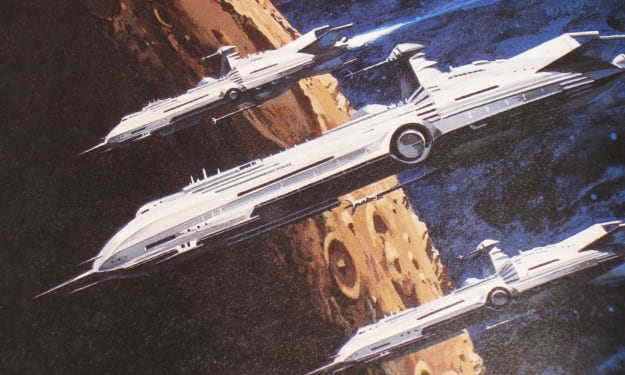
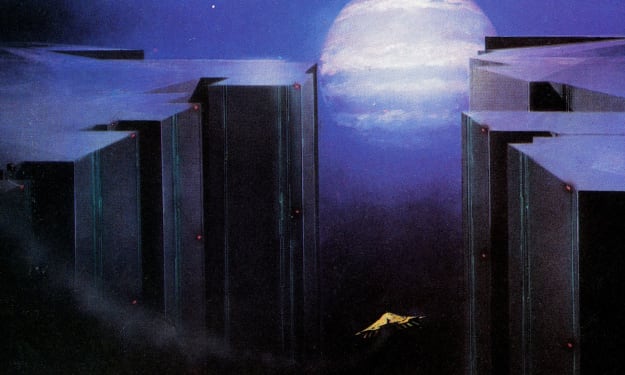
A painter of fantastic futures and one of the world's leading visionaries of speculative fiction is sci-fi artist Vincent Di Fate. His work embodies an unrivaled vintage appeal that recalls when drive-in movie theaters scared milkshake-drinking teenagers across the United States. The New York-born artist invented worlds where finned-starships en route to the Messina Dust Cloud sit idly as desperate astronauts shiver awaiting their rescue. Cybernetic humans mutilate their own bodies to integrate with the overwhelming electronic world. Saturn's majestic rings capture irises in their gravity as onlookers gaze from the moon Iapetus. Di Fate has an enormous portfolio stretching across the world of speculative fiction, with more than 3,000 published works of science fiction, astronomical, and aerospace subjects. Considered by many to be one of the coolest sci-fi illustrators, the honors B-movies from the 1950's while envisioning a future life in the cosmos.
By Natasha Sydor10 years ago in Futurism
Best Sci-Fi Art Books
Sci-fi art doesn't just tell a story. It takes you into a story, often of your own making. Science fiction art inspires a creative process in the mind. Your intellect is forced to wrap a tale of other worlds and dimensions around the visual your eyes are locked on. From the erotic sci-fi art of greats like Hajimi Sorayama to the sweeping landscapes of sci-fi artist Vincent Di Fate, the works of sci-fi artists can be found in the best sci-fi art books, which provide countless hours of imagination and storytelling.
By Futurism Staff10 years ago in Futurism
Dune
If there's anywhere the old axiom about judging a book by its cover holds true, it's science fiction. Few classic sci-fi authors and their cover artists ever see the same vision for the cover illustration. Typically it is the publisher that makes the final choice. Dune art was different. John Schoenherr connected to Frank Herbert's vision immediately. He was able to tell the same story visually. "Herbert wrote in 1980 that though he had not spoken to Schoenherr prior to the artist creating the paintings, the author was surprised to find that the artwork appeared exactly as he had imagined its fictional subjects, including Dune Sandworms, Baron Harkonnen and the Sardaukar." An extraordinary illustrator is capable of contributing to a piece of literature and even enhancing its message. In the case of an artist like John Schoenherr, he became the franchise's joint architect and left a mark no less indelible than the novel itself.
By Futurism Staff13 years ago in Futurism