Biographies
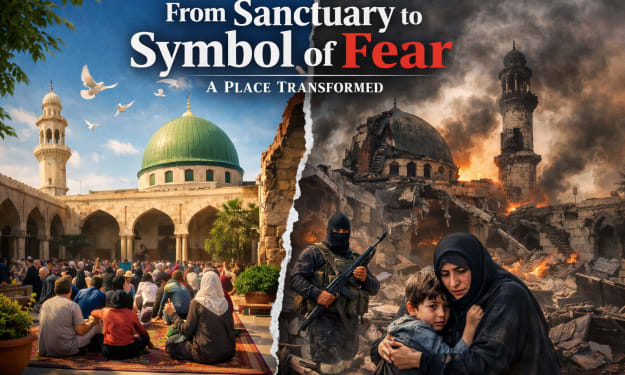
From Sanctuary to Symbol of Fear
Article (≈700 words): There are places in the world that once stood as powerful symbols of peace, unity, and human connection. These were spaces where communities gathered not only to worship or reflect, but also to find comfort, belonging, and hope. Over time, however, some of these sanctuaries have undergone tragic transformations. What was once a center of harmony has, in certain cases, become a symbol of fear—its meaning reshaped by conflict, violence, or neglect.
By Irshad Abbasi about 4 hours ago in History
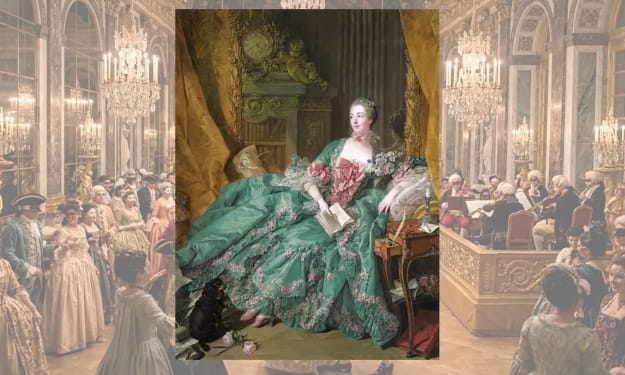
The Life and Legacy of Madame de Pompadour
Jeanne-Antoinette Poisson was better known in history as the Marquise de Pompadour. She remains one of the most polarising and fascinating figures ever to grace the halls of Versailles. While the palace is now a museum for the modern masses, in the 18th century, it was a high-stakes arena of power and prestige.
By Sam H Arnoldabout 4 hours ago in History
The Golden Age of Islam
The name Harun al-Rashid often evokes images of dazzling palaces, wise rulers in disguise, and tales filled with intrigue and adventure. Known as one of the most famous Abbasid caliphs, his legacy exists at the crossroads of history and legend. While his reign marked a true golden age of Islamic civilization, much of what people believe about him comes from literary imagination, particularly stories like One Thousand and One Nights. Understanding Harun al-Rashid requires separating documented historical achievements from the myths that later surrounded his name.
By Irshad Abbasi about 7 hours ago in History
Princess Yoshiko Kawashima
A Princess Caught Between Worlds Yoshiko Kawashima in her high school days (Wikipedia) Princess Yoshiko Kawashima, born Aisin Gioro Xianyu in 1907, was never destined for an ordinary life. As a descendant of the Manchu Qing Dynasty’s imperial family, she had royal blood running through her veins, but after the dynasty fell in 1912, she was sent to Japan and raised by Naniwa Kawashima, a nationalist with his own ambitions. Stripped from her homeland, she grew up navigating a strange, shifting identity — was she Manchu? Was she Japanese? Or was she simply a survivor?
By J.B. Millerabout 8 hours ago in History
The Baghdad Battery
Archaeologists found clay jars in Iraq containing copper cylinders and iron rods that produce electrical current when filled with acidic liquid, and if they're really batteries, they prove ancient civilizations had technology we thought was impossible until the modern era.
By The Curious Writerabout 10 hours ago in History
The Antikythera Mechanism
Greek sponge divers found a corroded lump of bronze in an ancient shipwreck in 1901, and when scientists finally X-rayed it in the 1970s, they discovered gears and mechanisms so advanced that nothing like it would appear again for 1,000 years.
By The Curious Writerabout 10 hours ago in History
Lake Vostok
Beneath Antarctica's ice sheet lies a lake the size of Lake Ontario that has been completely isolated from Earth's surface for 15 million years, and when Russian scientists drilled down to it in 2012, they discovered life forms that shouldn't exist.
By The Curious Writerabout 10 hours ago in History
The Sailing Stones of Death Valley
For decades, researchers found 700-pound boulders in Death Valley that had somehow traveled hundreds of feet across the desert floor leaving clear trails behind them, but nobody had ever witnessed the rocks actually moving until 2014.
By The Curious Writerabout 10 hours ago in History
Antarctica's Blood Falls Mystery
In 1911, explorers discovered a glacier in Antarctica bleeding bright red water, and when scientists finally analyzed what was coming out, they found an ecosystem that has been sealed away from Earth's surface for millions of years.
By The Curious Writerabout 10 hours ago in History
Did Alexander the Great’s Beloved Plot to Drown Him?
The life of Alexander the Great, the legendary Macedonian conqueror, is filled with extraordinary military campaigns, political intrigue, and legendary romances. Among these tales, one of the most enduring—and controversial—is the story involving his wife, Roxana of Bactria. According to some historical anecdotes and later legends, Roxana, the young and beautiful princess whom Alexander married during his campaigns in Central Asia, may have harbored intentions of betrayal. One particularly dramatic narrative claims that she tried to drown him—a story that continues to captivate historians and storytellers alike.
By Irshad Abbasi about 15 hours ago in History
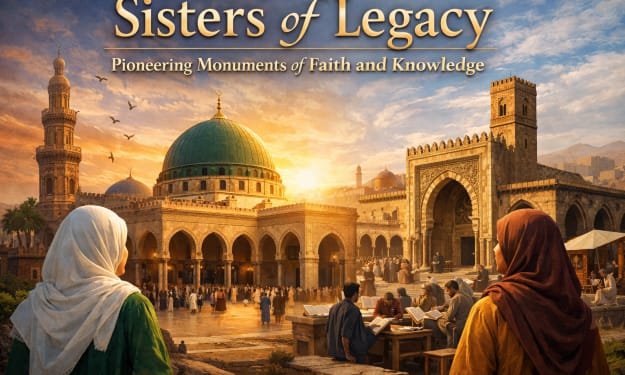
Sisters of Legacy
One built a mosque that echoed devotion; the other founded one of the world’s oldest seats of learning. Throughout history, remarkable women have often been overlooked in the annals of monumental achievements. Yet, some sisters defied societal constraints and left legacies that continue to shape culture, education, and faith. One sister chose to immortalize her devotion through the construction of a mosque, a place of worship and spiritual gathering, while the other contributed to humanity’s intellectual heritage by establishing a university that has educated generations. Their stories reveal not only the power of vision and dedication but also the transformative impact women can have on society.
By Irshad Abbasi a day ago in History