travel
The best travel locations for vacations or workplace locations around the country and the world.
The flames of war flared up in the Middle East: Trump’s adventures and Gulf contradictions have brought the world to a dangerous turning point
(Special Report: Journalist Malik Sarfaraz Hussain Awan) The Middle East is currently sitting on the worst and most dangerous gunpowder pile in history, where even a small spark can turn the peace and economy of the entire world into a pile of ashes. Donald Trump’s unpredictable foreign policy and American adventures in the Gulf region have so badly disturbed the traditional balance of the region that the flames of war are now crossing the borders and reaching the safest havens of the Gulf countries. The dramatic military and diplomatic developments in recent hours are clear evidence that this crisis is no longer just a regional conflict, but has emerged as a deadly poison for the global economy and security. The biggest and most horrific news has come from the United Arab Emirates, where the UAE Ministry of Defense has officially confirmed that its advanced air defense system destroyed 16 ballistic missiles and 42 drones launched by Iran in the air. Iran has mainly targeted industrial and military areas in Abu Dhabi and Dubai. Although the air defense prevented a major disaster by thwarting this major attack, debris and direct attacks have still caused heavy explosions in densely populated areas of Dubai and industrial zones in Abu Dhabi. Iran has specifically targeted the aluminum industry, damaging the Emirates Global Aluminum plant in Abu Dhabi and injuring employees working there. According to the Ministry of Defense, so far, two UAE military personnel, a Moroccan contractor working for the military, and eight civilians from Pakistan, Nepal, Bangladesh, Palestine, and India have been killed in these attacks, while a total of 178 people from different countries have been injured. The decision of Yemen’s Houthi rebels to enter regular war has added fuel to the fire. Houthi spokesman Yahya Saree confirmed in his official statement that they have fired drones, including ballistic and cruise missiles, targeting Israel’s southern and sensitive military sites. This move by the Houthis will expand the scope of this war to the strategic routes of the Red Sea and Bab al-Mandab. About 12 percent of the world’s trade passes through these sea routes. If the Houthis start targeting global shipping like in the past, the international energy market and supply chain will be completely paralyzed, resulting in exorbitant inflation and economic collapse on a global scale. If we look behind the scenes of all these serious military adventures, the biggest root is the open contradiction and double standards of the US Gulf policy. On the one hand, the US sings the tune of peace and security in the Middle East, and on the other hand, it keeps the region in a state of constant instability to protect its own economic and military interests. Due to this expediency, the Gulf countries are now realizing that the US umbrella is no longer a guarantee of their complete protection, and shells and missiles are now raining down on their own territory in the war for US interests. On the other hand, Israel and the US have not sat silent either. The Israeli Air Force has targeted and destroyed the Iranian Ministry of Defense factory in Tehran, which was manufacturing parts for ballistic missiles. In addition, Iran’s largest steel plants in Isfahan and Ahvaz have been bombed. The US Pentagon and the Israeli military are jointly targeting Iran’s defense and industrial infrastructure, and the US Air Force has carried out heavy bombing of Iranian coastal cities and naval installations near the Strait of Hormuz in the past 24 hours in an attempt to cut off Iran’s supply line. In view of this extremely worrying and terrifying situation, a very important four-nation emergency meeting has begun in the Pakistani capital, Islamabad. The foreign ministers of Pakistan, Saudi Arabia, Egypt and Turkey are sitting together in Islamabad to find a middle way to reduce the dangerous tension in the Middle East. Pakistan is currently trying to play the role of a bridge between the US and Iran through back-channel diplomacy, because Islamabad knows very well that if the fire of war spreads further in the Gulf and the Middle East, its heat will directly burn Pakistan’s fragile economy and energy needs to ashes. The bottom line is that Donald Trump's personal adventures and the US administration's contradictory Gulf policies are now becoming unbearable for the world. This contradiction is a stain on the forehead of the global economy and peace that is gradually pushing the entire world towards a great war. Now is the time for the international community to abandon its traditional silence and expediency and raise its voice against these contradictions, otherwise history is a witness that when economic and political greed exceeds limits, then nothing but destruction is achieved.
By Malik Sarfraz Hussain Awan2 days ago in Journal
How to Bring Traditional Thai Elegance to a Wedding in Chiang Mai
Chiang Mai is a place where history, craftsmanship, and landscape can shape unique ceremonial experiences. Introducing traditional Thai elegance into a wedding here means grasping the significance of rituals, architectural context, and the cultural elements that define northern Thailand’s identity.
By Jeewanthi Armstrong2 days ago in Journal
How to See a Different Side of Salalah
Salalah, Oman’s third-largest city, is famous for its coastal beauty, but its history goes back over two thousand years. Travellers who venture beyond the shoreline will find archaeological sites, mountain landscapes, and a frankincense heritage that continues to define southern Oman’s identity.
By Jeewanthi Armstrong2 days ago in Journal
How to put together an affordable holiday in the Maldives
The Maldives is one of the priciest holiday destinations in the world, but if you are a smart saver, you can also have a budget-friendly stay there. Check out the advice we offer in this article to reduce the overall cost of your time in Paradise Nation. From affordable excursions to cheap food and discounts on accommodations, enjoy a fantastic vacation in the Maldives on a shoestring budget.
By Jeewanthi Armstrong3 days ago in Journal
How to enjoy the best of what Patong Beach and its surroundings have to offer
Centred on one of the most beautiful beaches in Phuket, Patong is a beach resort town which is buzzing with life and has modern facilities which are on par with the rest of the world. It is famous for its night entertainment, as there are plenty of bars and party places scattered around the destination. So make sure to take full advantage of your stay there, here is a guide to own Patong Beach and its surroundings during your stay there.
By Jeewanthi Armstrong3 days ago in Journal
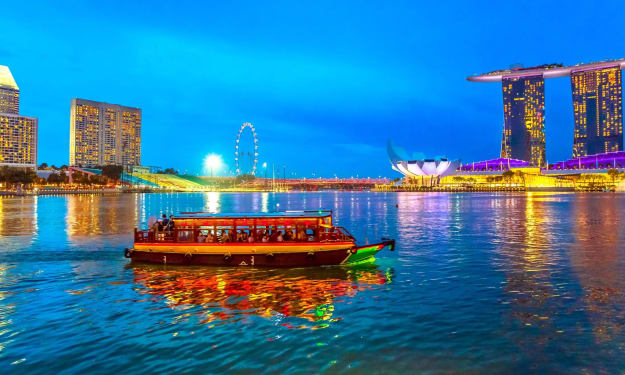
How to explore Singapore River and Chinatown
Trendy, relaxed and filled with an abundance of highlights, Robertson Quay is an explorer’s dream! It is filled with interesting places you can visit for a memorable vacation. Filled with many eateries, cafes and restaurants as well as some key attractions close by, this is a great place to enjoy some tranquil vibes. Known as the perfect location to engage in some evening strolls before nightlife sets in, here is a look at how to make the best of your stay at Robertson Quay.
By Jeewanthi Armstrong3 days ago in Journal
The movement of the Pakistani fleet in the Strait of Hormuz and the reality of global statements
Special Analysis: Journalist Malik Sarfaraz Hussain Awan: The Strait of Hormuz, located at the mouth of the Persian Gulf, is not just a maritime passage, but has become a key center of global politics where the eyes of the world are fixed on every passing ship. If the situation from the past week, i.e. March 20, 2026, is examined closely, it is clear how the data is being presented in different ways to create excitement in the region. Because the recent statements of US President Donald Trump, in which he allegedly made claims such as unclear naval missions and a situation of distrust in the region, are proving to be baseless in the face of ground realities and technical data, and a professional and impartial investigation requires us to weigh these claims in the scales of satellite monitoring and naval logistics so that the real situation can be determined. It can be seen that during this sensitive period, the movement of four important ships of the Pakistan National Shipping Corporation has assumed the greatest importance, the first of which is MT Shalimar, which began its departure on the evening of March 20 and determined its destination by passing through the southern part of the Strait of Hormuz in the early morning of March 22. This oil tanker was heading towards the port of Fujairah in the United Arab Emirates for fully specified commercial purposes, the choice of which in itself is an argument that the ship was not on an undisclosed mission but was part of the international supply chain because this port is considered one of the major logistics centers in the world where ships are in and out at all times and its travel record shows that it fully respected the maritime boundaries. Similarly, the case of MT Karachi, which knocked on the entrance to the Strait of Hormuz on the night of March 23 and regularly crossed this passage on March 24. This ship was headed directly towards Pakistan's Port Qasim, which is the main source of the country's energy needs. It was bringing crude oil from the Gulf region to meet its energy needs because it is not possible for a country like Pakistan, which depends on imported oil for its energy needs, to use its limited resources in a political process that could affect its long-standing regional relations. And when the scope of the investigation extends to MT Lahore, it is found that this ship made its position clear on the afternoon of March 24 and on March 25, it successfully crossed the Strait of Hormuz and set sail for the industrial port of Jubail in Saudi Arabia. The ship, which is engaged in the delivery of chemical and refined petroleum products, adhered to all international safety protocols while passing through the narrowest part of the Strait of Hormuz, whose logbook records show that its route and timetable were in accordance with commercial agreements. While the fourth ship, MV Lucky, which is a bulk carrier, passed through this important waterway on the night of March 20 to anchor at Jebel Ali on March 21 and the construction cargo loaded on this ship The material and machinery are proof that Pakistan's maritime activities are purely related to economic stability and development. One thing these four ships had in common was that at any stage their Automatic Identification System (AIS) remained active, which is sufficient to negate any suspicious or illegal activity under international maritime laws. If we compare the travel times of these ships, it is seen that each ship maintained its prescribed speed and route, which is monitored not only by satellites but also by regional maritime authorities who are also present here all the time. Therefore, President Donald Trump's statements that some covert measures were taken regarding oil shipments in the region are not technically correct because it is impossible for any ship to escape monitoring in a high-alert passage like the Strait of Hormuz. If there was any such activity, the relevant maritime administration, which identifies and checks every passing ship, would have taken formal notice of it by now, which shows the fact that Pakistan is currently a responsible state at the international level. As a country, Pakistan is respecting its maritime borders and international laws, and the statements of the US President cannot be seen in isolation from his political narrative and efforts to increase specific pressure in the region, which are often aimed at gaining political advantage, because the essence of a comprehensive investigative report is that as long as solid travel records and maritime logs are available, the professional reputation of a country cannot be questioned on the basis of mere statements. And this movement of Pakistan's naval fleet is a reflection of the fact that the country is adopting legal and transparent ways to support its economy and, contrary to the propaganda of various circles, is committed to maintaining trade balance in the region, all the contents of which make it clear that the truth is always hidden in figures and undeniable facts, and not in emotional speeches and unverified allegations that often cause damage to international relations. And this investigation also proves that the ships of the Pakistan Maritime Corporation not only reached their destinations on time, but their movements No aspect of the agreement violates international trade rules because in the current situation in the region, where it is very easy to create misunderstandings, such authoritative data shows that economicInterests and commercial cooperation are the foundations on which future diplomacy is built, and this documented history of Pakistani ships proves that the state is focused solely on promoting its economic stability and cooperation with the international community, and any kind of negative propaganda has nothing to do with reality, which for a dedicated journalist should be the basis of any major report so that only information that is beyond all doubt reaches the readers, and this is the path by which we can uphold our journalistic reputation at the global level. Furthermore, the voyage charts of these four ships, MT Shalimar, MT Karachi, MT Lahore and MV Lucky, make it clear that at no time between March 20 and March 27, they did not unnecessarily stop their journey or turn to any port that was not included in their manifest, which proves that the cargo loaded on these ships and their destinations were completely legal, and this investigation has also revealed that These ships of the Pakistani Navy were fully cooperating with regulatory authorities in Gulf waters and their schedule reflects a normal commercial activity that completely rules out the possibility of any kind of clandestine mission or illegal delivery. This is the truth that must be conveyed to the general public and international institutions in today's era so that the facts are not distorted and journalistic values are upheld, thanks to which transparency and justice will prevail in society.
By Malik Sarfraz Hussain Awan4 days ago in Journal
The movement of the Pakistani fleet in the Strait of Hormuz and the reality of global statements
Special Analysis: Journalist Malik Sarfaraz Hussain Awan: The Strait of Hormuz, located at the mouth of the Persian Gulf, is not just a maritime passage, but has become a key center of global politics where the eyes of the world are fixed on every passing ship. If the situation from the past week, i.e. March 20, 2026, is examined closely, it is clear how the data is being presented in different ways to create excitement in the region. Because the recent statements of US President Donald Trump, in which he allegedly made claims such as unclear naval missions and a situation of distrust in the region, are proving to be baseless in the face of ground realities and technical data, and a professional and impartial investigation requires us to weigh these claims in the scales of satellite monitoring and naval logistics so that the real situation can be determined. It can be seen that during this sensitive period, the movement of four important ships of the Pakistan National Shipping Corporation has assumed the greatest importance, the first of which is MT Shalimar, which began its departure on the evening of March 20 and determined its destination by passing through the southern part of the Strait of Hormuz in the early morning of March 22. This oil tanker was heading towards the port of Fujairah in the United Arab Emirates for fully specified commercial purposes, the choice of which in itself is an argument that the ship was not on an undisclosed mission but was part of the international supply chain because this port is considered one of the major logistics centers in the world where ships are in and out at all times and its travel record shows that it fully respected the maritime boundaries. Similarly, the case of MT Karachi, which knocked on the entrance to the Strait of Hormuz on the night of March 23 and regularly crossed this passage on March 24. This ship was headed directly towards Pakistan's Port Qasim, which is the main source of the country's energy needs. It was bringing crude oil from the Gulf region to meet its energy needs because it is not possible for a country like Pakistan, which depends on imported oil for its energy needs, to use its limited resources in a political process that could affect its long-standing regional relations. And when the scope of the investigation extends to MT Lahore, it is found that this ship made its position clear on the afternoon of March 24 and on March 25, it successfully crossed the Strait of Hormuz and set sail for the industrial port of Jubail in Saudi Arabia. The ship, which is engaged in the delivery of chemical and refined petroleum products, adhered to all international safety protocols while passing through the narrowest part of the Strait of Hormuz, whose logbook records show that its route and timetable were in accordance with commercial agreements. While the fourth ship, MV Lucky, which is a bulk carrier, passed through this important waterway on the night of March 20 to anchor at Jebel Ali on March 21 and the construction cargo loaded on this ship The material and machinery are proof that Pakistan's maritime activities are purely related to economic stability and development. One thing these four ships had in common was that at any stage their Automatic Identification System (AIS) remained active, which is sufficient to negate any suspicious or illegal activity under international maritime laws. If we compare the travel times of these ships, it is seen that each ship maintained its prescribed speed and route, which is monitored not only by satellites but also by regional maritime authorities who are also present here all the time. Therefore, President Donald Trump's statements that some covert measures were taken regarding oil shipments in the region are not technically correct because it is impossible for any ship to escape monitoring in a high-alert passage like the Strait of Hormuz. If there was any such activity, the relevant maritime administration, which identifies and checks every passing ship, would have taken formal notice of it by now, which shows the fact that Pakistan is currently a responsible state at the international level. As a country, Pakistan is respecting its maritime borders and international laws, and the statements of the US President cannot be seen in isolation from his political narrative and efforts to increase specific pressure in the region, which are often aimed at gaining political advantage, because the essence of a comprehensive investigative report is that as long as solid travel records and maritime logs are available, the professional reputation of a country cannot be questioned on the basis of mere statements. And this movement of Pakistan's naval fleet is a reflection of the fact that the country is adopting legal and transparent ways to support its economy and, contrary to the propaganda of various circles, is committed to maintaining trade balance in the region, all the contents of which make it clear that the truth is always hidden in figures and undeniable facts, and not in emotional speeches and unverified allegations that often cause damage to international relations. And this investigation also proves that the ships of the Pakistan Maritime Corporation not only reached their destinations on time, but their movements No aspect of the agreement violates international trade rules because in the current situation in the region, where it is very easy to create misunderstandings, such authoritative data shows that economic
By Malik Sarfraz Hussain Awan4 days ago in Journal
How to work out during your vacation
Staying on top of your fitness routine is no easy feat during your holiday because vacations are generally the times when you indulge in the amenities available rather than watch your waistline. Tight schedules, impulses to try out what is available, and pampering make it difficult to seek out healthy food options or drop into any fitness classes available. Learn how you can travel, enjoy yourself to the hilt and keep on track of your wellness goals in a top tourist hub like Krabi, Thailand.
By Jeewanthi Armstrong4 days ago in Journal
How To Navigate Bangkok with Ease
Among the most visited countries in the world, Thailand is one that ranks quite high. This is probably because the country is always moving fast, and there is a lot to see. The capital city, Bangkok, is no exception to this. With the right transport choices, visitors can travel smoothly between temples, markets, as well as the plethora of shopping districts without unnecessary confusion. Understanding how trains, boats, and road transport work together helps create an easy travel experience for everyone.
By Jeewanthi Armstrong4 days ago in Journal