work
The mind at work; explore the ins and outs of mental health in the workplace and how to optimize employee psyche and, by extension, your organization's bottom line.
Counseling And Therapy For Addiction and Mental Health. Top Story - December 2021.
I was meeting with a man for the first and last time in a session that usually did not go this way. He asked if I could hear his confession. I told him that I was not a priest and that if it was a crime or involved hurting himself or another, I could not keep that secret as a priest could. As he started to talk, he made it clear enough without saying it that he had killed someone. Or that at least he was paid to hurt others and paid well to do that. I told him that people in recovery will often make amends by offering to not do that thing anymore. Then he said, “I probably couldn’t do that. I believe that if I’m paid to do this again, I will.” I was thinking how I really didn’t want to carry around his crime or crimes with me. I then said that I would like to help him but I was sure that his best bet would be to speak with a priest and I encouraged him to do that as soon as possible. Our session ended. I think back on that day often. I was new to the position of counselor. A few years later, I was told in a high-speed chase with law enforcement, with him on a motorcycle, he went off the road and became paralyzed for the rest of his life. I was told he is living in a nursing home and that is probably where he will live out his days. Could I have done something different. Something that may have prevented this from happening? This time and others I would look back to see if there wasn’t something that may have changed the circumstances.
By Denise E Lindquist4 years ago in Psyche
The Sunk Cost Fallacy Made Me Waste $1,000 and Two Years on a Failed Blog
The sunk cost fallacy is a cognitive bias that can hold you back in life. It makes you continue an effort you have already invested money, time, or energy in. Even though you know the effort is not successful, you keep throwing good money after bad.
By Kirsty Kendall4 years ago in Psyche
Employee Mental Health: Why It Is Important To Maintain It And How To Do It
Mental health: why it matters? The World Health Organization (WHO) estimates that productivity losses due to depression and anxiety cost the global economy $ 1 trillion a year. In addition, the WHO found that for every $ 1 spent on treating common mental illnesses, $ 4 is returned due to improved health and productivity.
By Michail Bukin4 years ago in Psyche
5 of the Best Work Boots for Flat Feet
One of the challenges with having flat feet is that you can have a hard time finding shoes or boots to accommodate for your condition. For those looking for work footwear, there are some great options out there if you know where (and what) to look! Here's our list of 5 best work boots perfect fit and comfortable enough in every type of environment:
By work boott4 years ago in Psyche
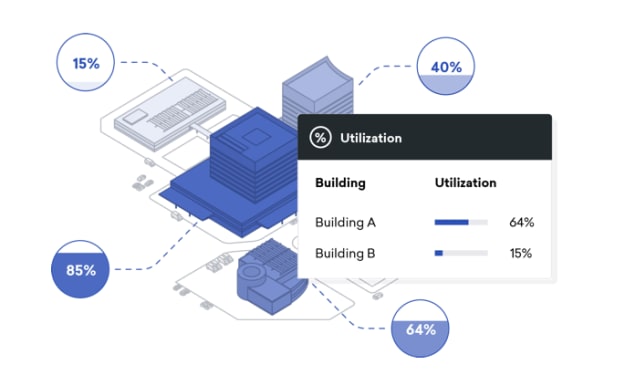
Why You Can’t Get Serious About Productivity Unless You Optimize How Your People Use Your Space
For a living, I fund startups. Before that, I was the founder of two software companies. I have spent hours studying historical finances, forecasts, and future projections. As a typical tech startup, I can easily tell you that the two largest cost items are people (60-75% of total expenses) and space (20-20%). Inventory (for hardware and eCommerce companies) is the only significant cost item I see in early-stage startups.
By Damian Peters4 years ago in Psyche
The Incredible Truth About Emotional Intelligence and Entrepreneurship
It was long believed that to become an entrepreneur, you needed to have a high intelligence level. To be an entrepreneur, you don't need to have a high intelligence quotient. You need emotional intelligence, which is something completely different. This trait is more a part of your personality than something you have. It has increased in the past few years as more people try to be emotionally intelligent.
By Damian Peters4 years ago in Psyche
The Fear of Not Being Productive Enough
Rupi Kaur, in her book, Home Body, expresses one can become full of impatience and self-doubt thanks to capitalism. That your self-worth can be tied to how much you produce for people to consume. If you’re a writer, artist, or business owner, you may recognize these feelings.
By Candice Galek4 years ago in Psyche
On Roller Skates
Maybe I should change something about how I humbly begin here by addressing myself by say a funky nickname like Han Solo. I do not expect this to do business ( the only idea I have currently is sports related ) . Unless somehow things take a turn towards entertainment no one will look at this non challenge contest potential submission.
By P. B. Friedman5 years ago in Psyche
Scene 14
The debate has been a long one; nature vs. nurture. Which one is responsible? Are they both? Is genetics the real picaroon pathing the way to uncertainty for answers? Moreover, precisely, what are these things responsible for? I believe, it is not who but how. In this blog post, I bring to light some of the heavier questions about brain chemistry, conditioning, and the touch of epigenetics being responsible for who we are, and not something as vague or simple as, nature vs. nurture.
By Ali Ryerse5 years ago in Psyche