defense
Moving through the ranks of military activity including infrastructure, wars, our commander in chief and the nucleur arms race.
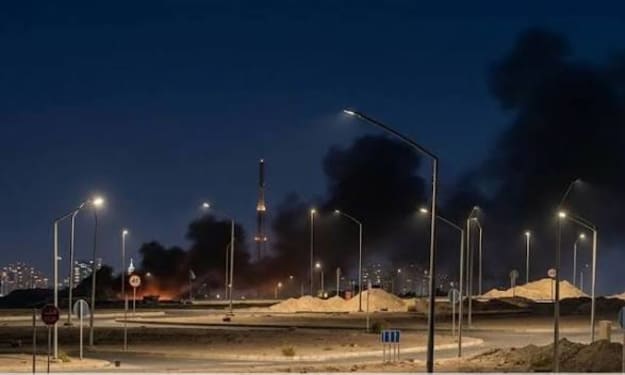
Kuwait Says Drones Struck Airport’s Radar System. AI-Generated.
Drone attack damages key air traffic infrastructure as regional tensions escalate In a significant development on Day 16 of the Middle East crisis, Kuwait’s Public Authority for Civil Aviation confirmed that multiple unmanned aerial vehicles (UAVs) struck the radar system at Kuwait International Airport late Saturday evening, causing damage to critical air traffic control infrastructure but — crucially — resulting in no reported human casualties. The strike — part of a wider pattern of drone and missile activity across the Gulf in recent weeks — represents an escalation of hostilities that have complicated life in one of the world’s most strategically important regions. Details of the Attack According to the civil aviation authority’s statement released on Sunday, several drones approached Kuwait International Airport — one of the busiest hubs in the Gulf — and struck its radar infrastructure, a core component used to monitor and guide aircraft movements. Kuwaiti officials said the incident activated emergency safety procedures put in place earlier in the crisis, and all civil aviation operations were managed according to established protocols. Spokesperson Abdullah Al‑Rajhi reiterated that no injuries were reported, and authorities are continuing to assess the full extent of the damage. The airport’s runway and passenger terminals were not specifically reported as hit in this latest incident, but the radar damage poses serious challenges for maintaining normal flight operations. The Kuwaiti military separately confirmed that its air‑defense systems engaged “hostile missile and drone attacks” in connection with the incident, with explosions heard in Kuwait City likely due to interception operations rather than direct strikes on the capital itself. Regional Context: Escalating Drone Activity The drone attack on Kuwait’s civil aviation infrastructure comes amid broader regional tensions linked to the ongoing war between the United States and Israel on one side and Iran on the other. Since late February, Iran has launched numerous drone and missile strikes targeting U.S. military installations and allied positions across the Middle East, triggering retaliatory actions and heightened alert levels in nearby countries. Kuwait — while a smaller Gulf state — finds itself geographically and politically close to major military players. It hosts significant foreign military logistics facilities and serves as a waypoint for regional commerce, making it vulnerable to spillover effects from the conflict. Previous drone and missile activity in and around Kuwait has included attacks on fuel storage and logistic hubs, as well as U.S. bases in the country. Even before this latest radar strike, Kuwait had experienced direct hits from Iranian drones earlier in the conflict, including strikes that damaged infrastructure and forced temporary closures or operational restrictions. Impact on Air Travel and Safety The radar systems at airports are essential for air traffic control, enabling controllers to track and guide aircraft both on the ground and in the skies. Damage to such systems can temporarily disrupt commercial flights, force diversions, or require temporary reliance on backup systems with limited capacity. Travel analysts and airline officials have warned that the Gulf region’s escalating security risks already heightened passenger anxiety and complicated scheduling, particularly as neighboring hubs — such as Doha, Bahrain, and the United Arab Emirates — have faced their own disruptions. Kuwait International Airport serves not only domestic and regional flyers but also millions of international passengers annually. Any prolonged downtime of radar systems could significantly affect global flight routes connecting Asia, Europe and Africa via the Gulf. Airlines may need to adjust operations, re‑route flights, or temporarily rely on backup facilities while the damage is repaired. Government and Security Response In their official statements, Kuwaiti authorities underscored that existing emergency plans and civil aviation safety measures were activated immediately following the attack. These protocols, introduced early in the regional crisis, aim to ensure passenger and crew safety, maintain airspace order, and mitigate risks to civilian infrastructure. Kuwait’s defense leadership also emphasized that its integrated air‑defense network — coordinating radar systems, interceptor units and allied support — successfully responded to hostile aerial threats in the region. The military’s statement suggested that sounds heard by residents in Kuwait City likely came from interception efforts against incoming drones or missiles yet to be publicly detailed. Officials have not publicly identified the party responsible for the drones that hit the radar system, and as of Sunday, no group had claimed responsibility. Given the complex web of alliances and hostilities in the Middle East, attribution remains sensitive and could carry diplomatic implications if officially confirmed. However, the strike is consistent with the pattern of Iranian‑linked UAV activities reported across the Gulf, often in retaliation against foreign military targets. Look Ahead As the Middle East crisis continues to unfold, the security of critical transport infrastructure — particularly airports — remains a priority for governments, airline operators, and international aviation agencies. Remaining civilian travel, defense collaborations and emergency preparedness will shape the next chapter of regional resilience and response.
By Fiaz Ahmed 2 days ago in The Swamp
U.S. Navy to increase production of anti-submarine mines. AI-Generated.
Washington, D.C. — The United States Navy has confirmed plans to expand the production of advanced anti‑submarine mine systems as part of an intensified effort to bolster its undersea warfare capabilities amid growing global competition below the waves. Officials say the move reflects mounting concerns about the expanding submarine fleets of peer competitors and the need to strengthen maritime deterrence and denial strategies. According to a recent presolicitation notice issued by the Naval Sea Systems Command, the Navy intends to modify an existing contract with General Dynamics Mission Systems that increases the number of units of the Hammerhead anti‑submarine mine to be procured over the next several fiscal cycles. The contract adjustment is designed to rapidly accelerate deliveries while ensuring operational demands are met beginning in fiscal year 2027. Senior Navy officials said that expanding Hammerhead production is a priority because the system provides a mobile, autonomous capability to detect, classify and engage hostile submarines — a capability that is increasingly vital in contested littoral and open‑ocean environments. The mines are designed to be deployed from unmanned underwater vehicles, surface vessels or aircraft, and operate in waters where traditional anti‑submarine warfare (ASW) assets may be vulnerable or limited. “We are rapidly adjusting our undersea capabilities to address the realities of great‑power competition,” a senior defense official involved in the procurement process told reporters on condition of anonymity. “The expansion of anti‑submarine mine production — particularly systems like Hammerhead — provides us with a crucial asymmetric advantage in waters where adversary submarine activity is increasing.” Why Mines Again? Naval mines have a long history as cost‑effective tools of maritime control and denial. During the Cold War, systems such as the Mark 60 CAPTOR mine were designed to disrupt Soviet submarine operations in critical chokepoints and served as part of layered ASW strategies. These weapons combined a torpedo killer with a stationary mine casing to detect and destroy submarines autonomously. Despite periods of diminished emphasis in the post‑Cold War era, mine warfare has regained attention within U.S. naval strategy as peer competitors modernize their undersea forces. The marked growth of adversary submarine fleets — particularly the rapid expansion of the People’s Liberation Army Navy nuclear and diesel‑electric submarine fleets — has renewed emphasis on tools that can impose area denial or complicate hostile maneuvers in strategic waters. Mine systems like Hammerhead are seen as force multipliers: they can extend ASW reach into denied areas, channel adversary submarines into predictable paths, and serve as persistent sensors and shooters long after initial deployment. Their autonomy also reduces risk to manned ASW platforms, which are vulnerable to advanced anti‑access systems and modern torpedoes. Industrial and Strategic Challenges Increasing production of advanced mines presents both industrial and strategic challenges. In its notice, the Navy acknowledged that General Dynamics Mission Systems is currently the only vendor capable of meeting the accelerated timeline for additional Hammerhead units, which is why the contract modification will proceed without full and open competition. This approach, while expedient, highlights broader constraints in the defense industrial base for undersea systems, where capable producers are limited and highly specialized. Supporters of the expanded program argue that concentrating production with an experienced contractor will avoid delays and preserve continuity, but some defense analysts have raised concerns about dependence on single suppliers for niche yet critical capabilities. Diversifying the industrial base, they say, could hedge against supply chain disruptions and reduce bottlenecks for future undersea programs. The increased production mandate comes at a time when the Navy is simultaneously stretched across a wide range of modernization and recapitalization efforts, including submarine construction, unmanned undersea systems and expanded mine countermeasure capabilities. Last year’s push for expanded procurement reflected similar pressures on the submarine industrial base, where funding boosts are being applied to sustain construction rates and address workforce constraints. Operational Context The strategic rationale for accelerating anti‑submarine mine production stems from the evolving global maritime environment. Analysts note that Russia’s modernization of its submarine fleet — as well as China’s rapid deployment of new nuclear and conventionally powered submarines — has placed increased pressure on U.S. undersea dominance. Submarines are a central element of both offensive and deterrent naval operations, making investments in tools that can detect and counter them a priority for defense planners. Complicating matters further, developments in autonomous underwater vehicles (UUVs) and unmanned surface vehicles (USVs) have reshaped mine warfare. Modern mines can be integrated with these platforms to achieve quicker, more precise deployment in contested or denied waters while complicating an adversary’s ability to detect and neutralize them. These advances signal a renewed era of undersea competition where traditional concepts are being blended with emerging technologies. Looking Ahead As the Navy prepares to issue and implement the contract modification for expanded Hammerhead supplies, officials emphasize that the program is just one part of a broader, multi‑domain approach to undersea warfare. Investments in detection systems, advanced torpedoes, and layered ASW networks — including manned and unmanned platforms — are moving forward in parallel to ensure that U.S. forces maintain a competitive edge beneath the surface. In an era defined by competition with near‑peer naval powers, the resurgence of mine warfare — once considered a legacy capability — underscores the complexity and adaptability of modern maritime strategy. The expanded anti‑submarine mine production effort reflects not only tactical considerations, but the Navy’s long‑term commitment to securing undersea superiority across critical sea lanes and contested regions.
By Fiaz Ahmed 3 days ago in The Swamp
Kharg Island Bombed: Trump.
Trump's postings on his social media network, Truth Social, can be flamboyant, over-the-top, dramatic, theatrical, and, dare I say, economical with the truth, making things seem bigger or better than they actually are. Not surprising from a man who thinks all eyes should be on him.
By Nicholas Bishop3 days ago in The Swamp
The US Navy Decommissioned Middle East Minesweepers Last Year. Here’s What They Did. AI-Generated.
Last year, the United States Navy officially decommissioned a fleet of minesweepers that had been stationed in the Middle East, concluding decades of service aimed at safeguarding critical maritime routes in one of the world’s most strategically important regions. These vessels, which included Avenger-class minesweepers, played a crucial role in ensuring the safety of naval and commercial traffic, countering the threat of naval mines, and supporting coalition operations. Minesweepers are specialized ships designed to detect and neutralize naval mines, which are explosive devices placed in waterways to disrupt shipping and military operations. In the Middle East, particularly in the Persian Gulf and surrounding waters, these ships were tasked with protecting vital oil shipping lanes, military supply routes, and key ports from potential threats posed by adversaries. According to Navy officials, the decommissioned minesweepers were deployed for a range of missions, including mine countermeasure exercises, port security operations, and joint drills with regional partners. “These vessels have served as a critical first line of defense, ensuring safe navigation for both military and civilian vessels,” said Rear Admiral James Goldrick, who oversees maritime security operations in the region. “Their contributions have been invaluable in maintaining stability and operational readiness.” During their service, the minesweepers used a combination of sonar systems, remotely operated vehicles (ROVs), and mechanical sweeping gear to detect and clear mines. This capability was particularly important in the Persian Gulf, a narrow waterway where even a small naval mine could severely disrupt maritime traffic and the global oil supply. Their operations required close coordination with coalition partners, including the navies of the United Kingdom, Saudi Arabia, and other regional allies. The decommissioning process involved carefully retiring the ships from active service, removing sensitive equipment, and transferring or scrapping vessels according to military regulations. Many of the minesweepers had served for decades, and technological advancements had rendered some systems outdated compared to newer mine countermeasure platforms, including unmanned surface vessels (USVs) and advanced sonar systems. While these ships are no longer in operation, their legacy continues through training programs and lessons learned that have informed the Navy’s modern mine countermeasure strategies. Crews trained on these vessels developed expertise in navigation, mine detection, and coordination under potentially hostile conditions, skills that are now being transferred to personnel operating next-generation platforms. The role of minesweepers in the Middle East was particularly critical during periods of heightened tension, when adversaries threatened the Gulf’s shipping lanes with the potential deployment of mines. Their presence acted as both a deterrent and a practical measure to ensure uninterrupted flow of oil and commerce. Naval analysts point out that the retirement of these vessels reflects a broader shift in naval strategy, moving toward unmanned systems and multi-mission ships that can handle mine countermeasures while performing other operational tasks. Despite their decommissioning, the US Navy remains committed to maintaining security in the region. Newer platforms, such as the Independence-class littoral combat ships, equipped with modular mine countermeasure packages, are gradually replacing the traditional minesweepers. These vessels use advanced technologies, including unmanned underwater vehicles (UUVs) and autonomous systems, to detect and neutralize threats more efficiently and with reduced risk to personnel. Experts highlight that the minesweepers’ retirement does not signal a reduction in the Navy’s commitment to the region. Instead, it reflects an adaptation to modern naval warfare, where unmanned and highly networked systems can perform tasks that previously required manned vessels. “The mission remains the same: to ensure maritime freedom of navigation and protect commercial shipping,” said one naval strategist. “We are simply using new tools to achieve it more effectively.” Over their decades of service, the Middle East-deployed minesweepers completed thousands of operational hours, conducted joint exercises with allied navies, and played a critical role in securing one of the world’s most vital maritime regions. Their crews often worked in challenging conditions, including extreme heat, tight operational areas, and periods of geopolitical tension, demonstrating professionalism and dedication. Looking ahead, the Navy plans to expand its use of unmanned systems and integrate new mine countermeasure capabilities into the fleet. Lessons learned from the retired minesweepers will continue to inform doctrine, training, and operational planning, ensuring that future personnel can respond effectively to mine threats in both the Middle East and other strategic theaters. The decommissioning of these minesweepers marks the end of an era for the US Navy in the Gulf, but their contributions remain a cornerstone of maritime security in the region. As technology evolves, the legacy of these vessels and their crews lives on in the Navy’s ongoing mission to safeguard critical waterways, protect global commerce, and support coalition partners in maintaining regional stability. By retiring the old ships and integrating modern platforms, the US Navy aims to continue projecting strength, ensuring safe navigation, and adapting to the evolving maritime threats of the 21st century.
By Fiaz Ahmed 4 days ago in The Swamp
WHY ARAB STATES BEING TARGETED?
It is absolutely clear that they will go after every country that threatens Israel or is considered an existential or security threat to it. The agenda of Washington, D.C. is very clear: they will target every country that threatens Israel, and either destroy it through carpet bombing or erase it, just as they did with Atomic bombings of Hiroshima and Nagasaki.
By Ibrahim Shah 4 days ago in The Swamp